Triethylamine → 2-(Pivaloylamino)pyridine
Reaction equation

[NH2:1][C:2]1[CH:7]=[CH:6][CH:5]=[CH:4][N:3]=1.C(N(CC)CC)C.[C:15](Cl)(=[O:20])[C:16]([CH3:19])([CH3:18])[CH3:17]>ClCCl>[N:3]1[CH:4]=[CH:5][CH:6]=[CH:7][C:2]=1[NH:1][C:15](=[O:20])[C:16]([CH3:19])([CH3:18])[CH3:17]Participants
5
Reactant 3

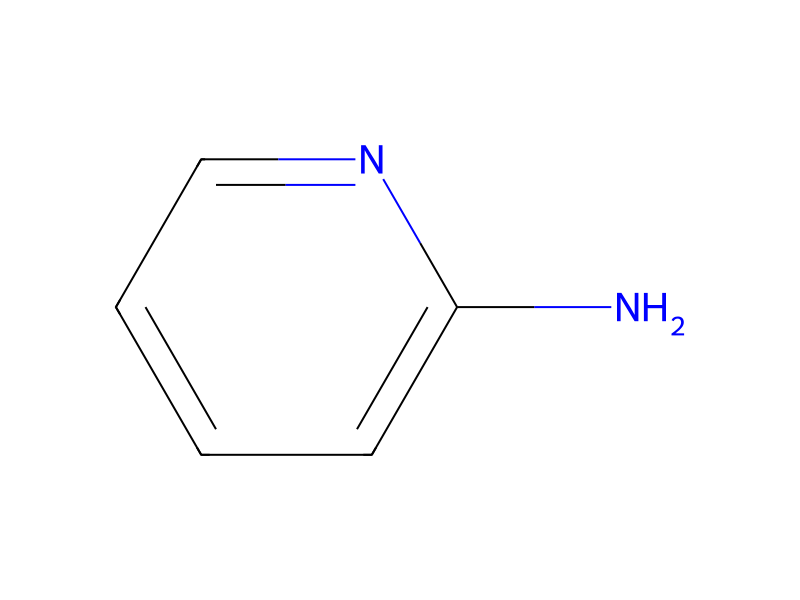

Product 1

Reagents, catalysts & solvents 1

Procedure
To a solution of 94.1 g (1.0 mol) of 2-aminopyridine and 173 ml (1.25 mol) of triethylamine in 400 ml of dichloromethane were added dropwise, whilst cooling with ice water, 132.5 g (1.099 mol) of pivaloyl chloride in 150 ml of dichloromethane. The mixture was stirred for 2 hours at room temperature and filtered to remove the triethylamine hydrochloride formed. The filtrate was washed with water and twice with 5% aqueous sodium hydrogen carbonate solution, then dried over sodium sulphate. After working up in the usual way 157.5 g (88.4% of theory) of colourless crystals of melting point 74-76° C. were obtained.
Workup
- filtrationfiltered
- customto remove the triethylamine hydrochloride
- customformed
- washThe filtrate was washed with water and twice with 5% aqueous sodium hydrogen carbonate solution
- dry with materialdried over sodium sulphate
- customwere obtained
Sources & evidence
- ORD record
- ord-d886a7be82fa4e2293be29ba15bb20f6
- Source dataset
- uspto-grants-2002_02
- Patent number
- US06344449B1
Reaction notes
Loading…