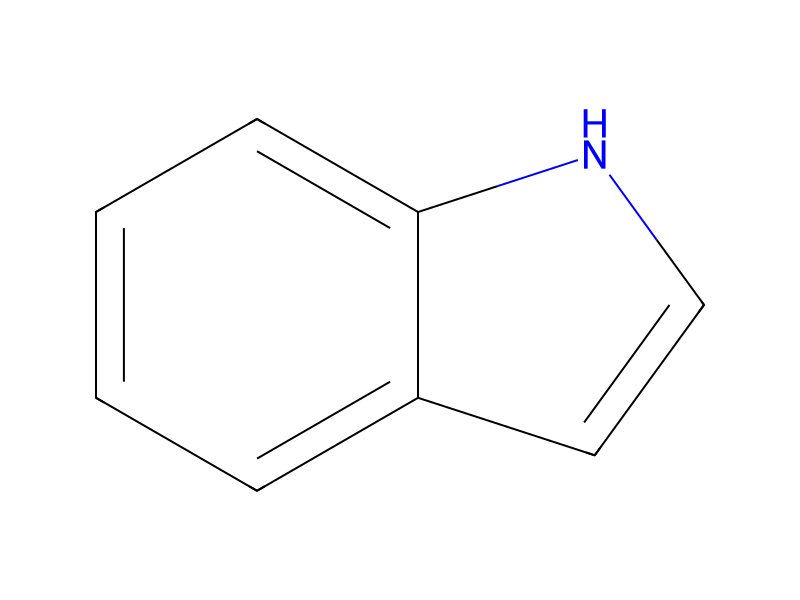
Indole → HCID 9795557, compound
Reaction equation

[CH3:1][N:2]([CH3:14])[N:3]=[CH:4][CH2:5][C:6]1[C:11](Cl)=[CH:10][CH:9]=[CH:8][C:7]=1Cl.[NH:15]1[C:23]2[C:18](=[CH:19][CH:20]=[CH:21][CH:22]=2)[CH:17]=[CH:16]1>>[N:15]1([C:7]2[CH:8]=[CH:9][CH:10]=[C:11]3[C:6]=2[CH:5]=[CH:4][N:3]3[N:2]([CH3:14])[CH3:1])[C:23]2[C:18](=[CH:19][CH:20]=[CH:21][CH:22]=2)[CH:17]=[CH:16]1Participants
3


Procedure
4-(1-indolyl)-1-(dimethylamino)indole was prepared in the same manner as in Example 16 except that 2,6-dichlorophenylacetaldehyde N,N-dimethylhydrazone was used in place of 2,4-dichlorophenylacetaldehyde N,N-dimethylhydrazone, and indole (212 mg, 1.81 mmol) was used in place of pyrrole. (Yield: 40%).
Sources & evidence
- ORD record
- ord-196192d085cf47f69b8b63eff05588df
- Source dataset
- uspto-grants-2002_02
- Patent number
- US06346621B1
Reaction notes
Loading…