O-Phenylenediamine → 4-Bromobenzene-1,2-diamine
Reaction equation

[C:1]1([NH2:8])[CH:6]=[CH:5][CH:4]=[CH:3][C:2]=1[NH2:7].C(OC(=O)C)(=O)C.[Br:16]Br>C(O)(=O)C>[Br:16][C:5]1[CH:4]=[CH:3][C:2]([NH2:7])=[C:1]([NH2:8])[CH:6]=1Participants
Reactant 3
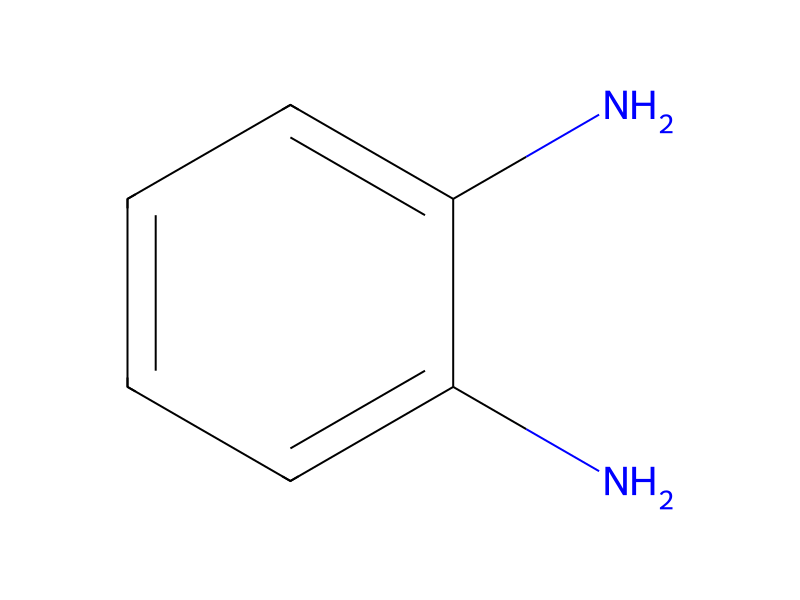


Product 1
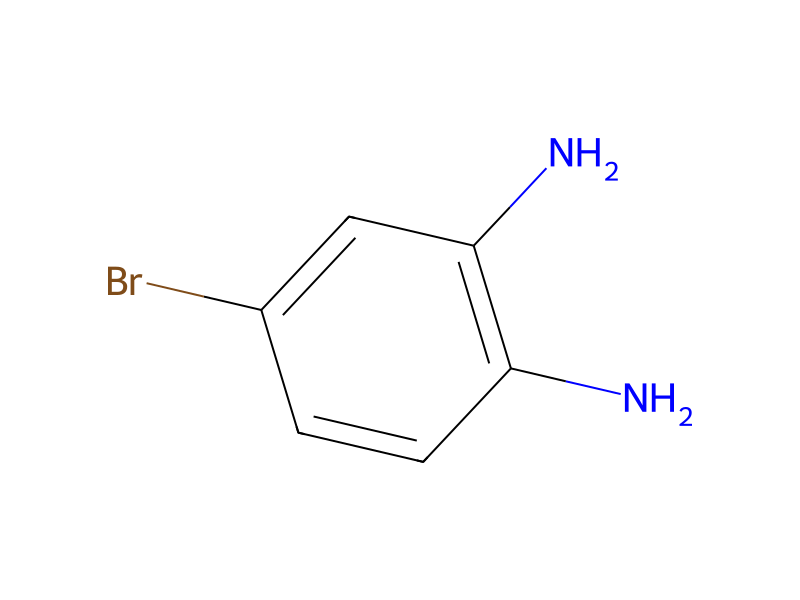
Reagents, catalysts & solvents 1

Conditions
- Temperature
- 65 °C
Procedure
In 64 ml of acetic acid, 8.0 g of o-phenylene diamine was dissolved, to which 15.3 ml of acetic anhydride was added drop-wise under cooling. Then the mixture was heated for 30 minutes in an oil bath at 65° C. After cooling to room temperature, a solution of bromine (4.6 ml bromine in 16 ml acetic acid) was quickly added, followed by heating for 40 minutes in an oil bath at 50° C. About 10 minutes after adding bromine, crystals started to precipitate. The reaction mixture was cooled to room temperature, and poured into 300 ml ice water containing 4.0 g sodium hydrogen sulfite. The resulting white precipitates were collected by filtration, washed with water and dried under reduced pressure (14.0 g; yield 70%). Into a 150 ml solution of water: methanol (2:1) containing 33.6 g potassium hydroxide, the white solid was dissolved and heated with stirring for 12 hours in an oil bath at 75-80° C. After cooling the reaction mixture, and adding 400 ml water thereto, the mixture was extracted with 100 ml ether five times. The ether phase was washed with 200 ml of saturated salt water two times, and dried with anhydrous sodium sulfate. The solvent was evaporated under reduced pressure. The residue was purified by silica gel column chromatography (hexane ethyl acetate=3:1 to 1:1) so as to obtain compound 13 as colorless crystals (5.5 g, total yield 40%).
Workup
- additionwas added drop-wise
- temperatureunder cooling
- temperatureAfter cooling to room temperature
- temperatureby heating for 40 minutes in an oil bath at 50° C
- customto precipitate
- temperatureThe reaction mixture was cooled to room temperature
- additionpoured into 300 ml ice water containing 4.0 g sodium hydrogen sulfite
- customThe resulting white precipitates
- filtrationwere collected by filtration
- washwashed with water
- customdried under reduced pressure (14.0 g; yield 70%)
- additionInto a 150 ml solution of water: methanol (2:1) containing 33.6 g potassium hydroxide
- dissolutionthe white solid was dissolved
- temperatureheated
- temperatureAfter cooling the reaction mixture
- additionadding 400 ml water
- extractionthe mixture was extracted with 100 ml ether five times
- washThe ether phase was washed with 200 ml of saturated salt water two times
- dry with materialdried with anhydrous sodium sulfate
- customThe solvent was evaporated under reduced pressure
- customThe residue was purified by silica gel column chromatography (hexane ethyl acetate=3:1 to 1:1) so as
Sources & evidence
- ORD record
- ord-b4ec3ce543164a6db6a826915d15433e
- Source dataset
- uspto-grants-2002_02
- Patent number
- US06350863B1
Reaction notes
Loading…