Ammonia → 2-(o-Fluorobenzyl)-4-chloroaniline
Reaction equation

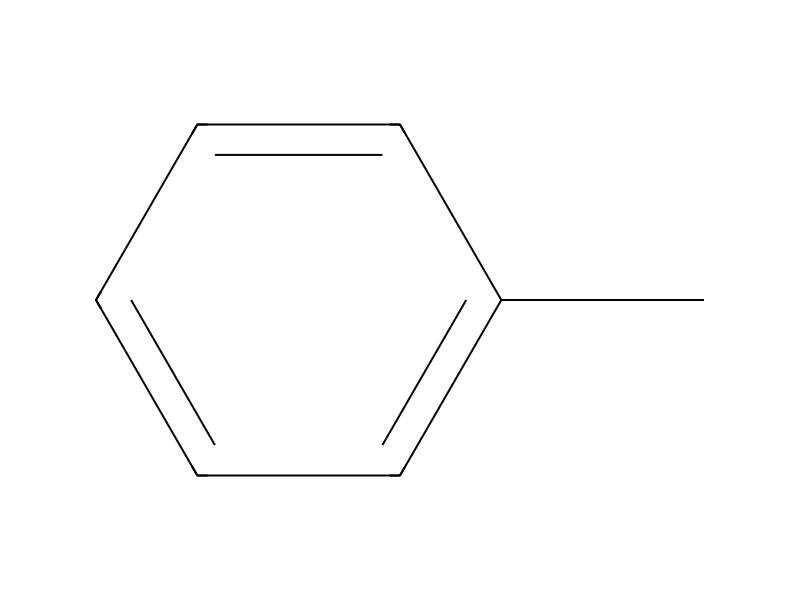
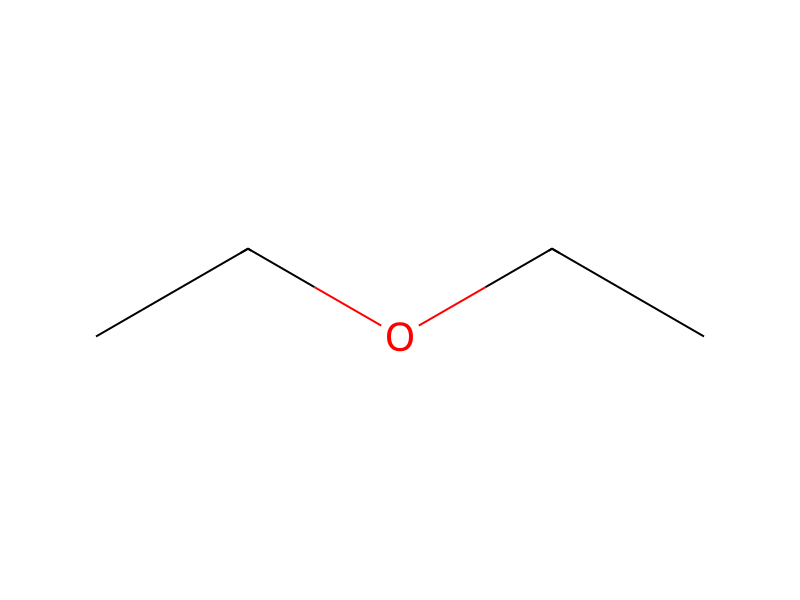
Cl.[NH2:2][C:3]1[CH:8]=[CH:7][C:6]([Cl:9])=[CH:5][C:4]=1[CH:10]([C:12]1[CH:17]=[CH:16][CH:15]=[CH:14][C:13]=1[F:18])O.N>CCOCC.[Zn].C(#N)C.CCOC(C)=O.CCCCCC.CO.C(Cl)(Cl)Cl.C1(C)C=CC=CC=1>[Cl:9][C:6]1[CH:7]=[CH:8][C:3]([NH2:2])=[C:4]([CH2:10][C:12]2[CH:17]=[CH:16][CH:15]=[CH:14][C:13]=2[F:18])[CH:5]=1Participants
Reactant 3


Product 1

Reagents, catalysts & solvents 6

Procedure
In a 5 l. three-necked flask fitted with stirrer, reflux condenser and thermometer is placed 2.5 l. of 6 N hydrochloric acid. It is heated to 50°-75° C. and 300-340 g of crude 2-amino-5-chloro- α-(2-fluorophenyl)benzenemethanol from the first example is added to the stirred acid. A dark oil may form. 400-425 g of zinc dust is added in portions with continued heating during 15-20 min. The temperature should be 90°-100° C. The addition of the zinc dust is mildly exothermic. The reaction mixture is then stirred and heated under reflux for 1 hr. TLC(10% MeOH/CHCl3) of an aliquot basified with ammonia and extracted with ether should show little or no starting material and a faster spot due to product. Only traces of zinc should remain. The reaction is cooled in an ice bath with stirring to 5°-10° C. A granular yellowish precipitate forms. This precipitate is collected in a sintered glass funnel and transferred to a 4 l separatory funnel. It is dissolved in 1.5 l. of ether and 500 ml of water. Traces of zinc are ignored. If there is enough to clog the stop cock it may be necessary to filter if off. The mixture is made basic by addition of 300 ml of concentrated ammonium hydroxide. A white precipitate is formed in the aqueous layer and then redissolves. The aqueous layer is separated; the ether layer is washed with 500 ml of water, dried over potassium carbonate, and concentrated in vacuo to leave an orange oil. 250 ml of toluene is added and the solution reconcentrated in vacuo. It is dissolved in 400-500 ml of ether. Gaseous hydrogen chloride is bubbled into this solution, first at room temperature and then with cooling in an ice bath. The mixture becomes cloudy and then with swirling crystals form. When it appears to be saturated with HCl, the mixture is allowed to stand in an ice bath for 1 hr. The solid is collected to give crude product. TLC(10% MeOH/CHCl3, and 25% EtOAc/hexane) should indicate reasonable purity. An analytical sample, m.p. 175°-181° C., was prepared by recrystallization from acetonitrile.
Workup
- customthree-necked flask fitted with stirrer
- temperaturereflux condenser
- temperatureIt is heated to 50°-75° C.
- customA dark oil may form
- temperaturewith continued heating during 15-20 min
- customshould be 90°-100° C
- temperatureheated
- temperatureunder reflux for 1 hr
- extractionextracted with ether
- temperatureThe reaction is cooled in an ice bath
- stirringwith stirring to 5°-10° C
- customThis precipitate is collected in a sintered glass funnel
- customtransferred to a 4 l separatory funnel
- dissolutionIt is dissolved in 1.5 l
- filtrationto filter if off
- additionThe mixture is made basic by addition of 300 ml of concentrated ammonium hydroxide
- customA white precipitate is formed in the aqueous layer
- dissolutionredissolves
- customThe aqueous layer is separated
- washthe ether layer is washed with 500 ml of water
- dry with materialdried over potassium carbonate
- concentrationconcentrated in vacuo
- customto leave an orange oil
- customGaseous hydrogen chloride is bubbled into this solution, first at room temperature
- temperaturewith cooling in an ice bath
- customform
- customThe solid is collected
- customto give crude product
Sources & evidence
- ORD record
- ord-eec9303fc4b9495884149a31b74c5b3e
- Source dataset
- uspto-grants-1980_03
- Patent number
- US04194049
Reaction notes
Loading…