2-Chlorobenzaldehyde → 4-[2-(2-chlorophenyl)ethyl]pyridine
Reaction equation

ClC1C=CC=CC=1C=O.CC1C=CN=CC=1.C(OC(=O)C)(=O)C.[Cl:24][C:25]1[CH:30]=[CH:29][CH:28]=[CH:27][C:26]=1[CH:31]=[CH:32][C:33]1[CH:38]=[CH:37][N:36]=[CH:35][CH:34]=1>>[Cl:24][C:25]1[CH:30]=[CH:29][CH:28]=[CH:27][C:26]=1[CH2:31][CH2:32][C:33]1[CH:34]=[CH:35][N:36]=[CH:37][CH:38]=1Participants
5
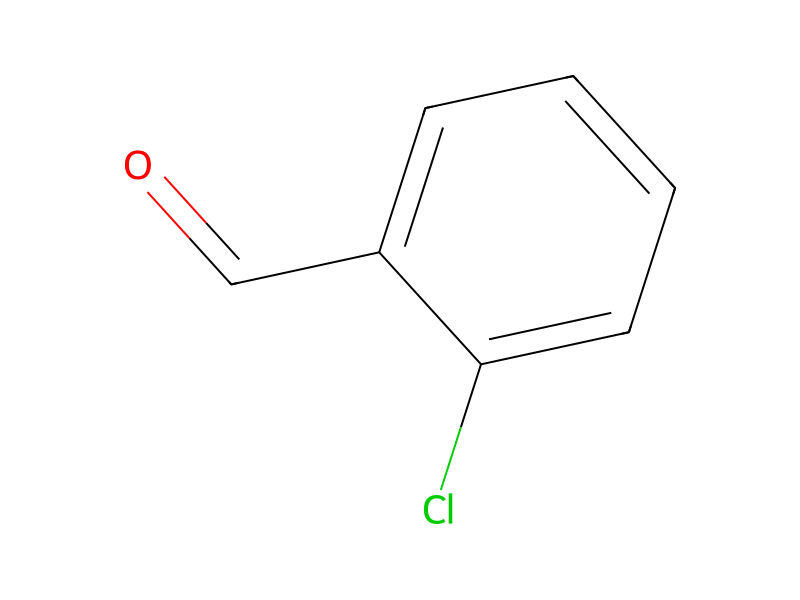



Procedure
14.1 g. (0.1 mole) of 2-chlorobenzaldehyde and 9.4 g. (0.1 mole) or 4-methylpyridine are refluxed for six hours in 40ml. of acetic anhydride. The reaction mixture is concentrated in vacuo and then dissolved in 200 ml. of chloroform. The chloroform solution is washed with aqueous sodium bicarbonate, dried with MgSO4, filtered and concentrated in vacuo. The oily residue is dissolved in isopropanol and treated with HCl in isopropanol until acidic. The crystalline hydrochloride salt is filtered, dissolved in 150 ml. of water and neutralized with aqueous sodium bicarbonate. The product is extracted with chloroform to yield 12.6 g. of oil 4-[2-(2-chlorophenyl)ethenyl]pyridine.
Workup
- concentrationThe reaction mixture is concentrated in vacuo
- dissolutiondissolved in 200 ml
- washThe chloroform solution is washed with aqueous sodium bicarbonate
- dry with materialdried with MgSO4
- filtrationfiltered
- concentrationconcentrated in vacuo
- dissolutionThe oily residue is dissolved in isopropanol
- additiontreated with HCl in isopropanol until acidic
- filtrationThe crystalline hydrochloride salt is filtered
- dissolutiondissolved in 150 ml
- extractionThe product is extracted with chloroform
- customto yield 12.6 g
Sources & evidence
- ORD record
- ord-0d95838e605e4d5da6dbcc339b399268
- Source dataset
- uspto-grants-1980_06
- Patent number
- US04208415
Reaction notes
Loading…