[1,1'-Biphenyl]-3,4-diol → HCID 20334219, compound
Reaction equation

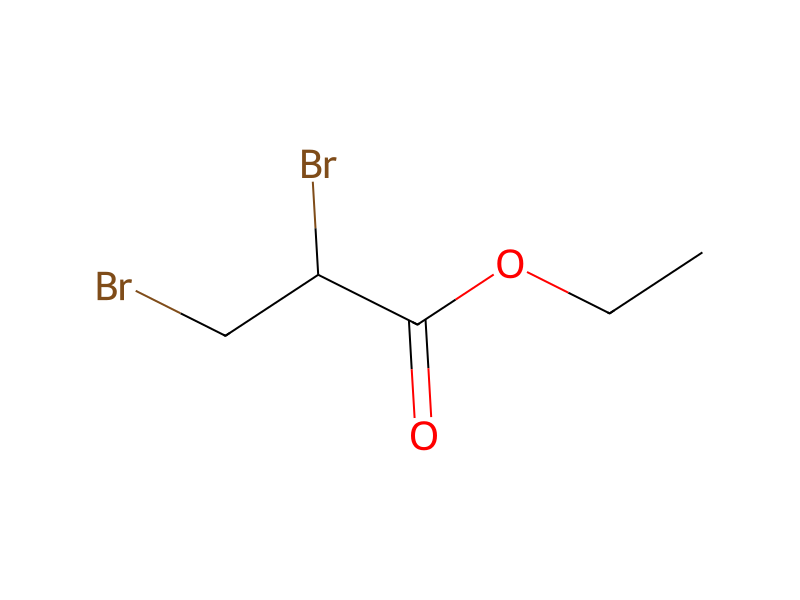
Br[CH:2]([CH2:8]Br)[C:3]([O:5][CH2:6][CH3:7])=[O:4].[C:10]1([C:16]2[CH:17]=[C:18]([OH:23])[C:19](=[CH:21][CH:22]=2)[OH:20])[CH:15]=[CH:14][CH:13]=[CH:12][CH:11]=1.C(=O)([O-])[O-].[K+].[K+]>CC(C)=O>[C:10]1([C:16]2[CH:22]=[CH:21][C:19]3[O:20][CH:2]([C:3]([O:5][CH2:6][CH3:7])=[O:4])[CH2:8][O:23][C:18]=3[CH:17]=2)[CH:11]=[CH:12][CH:13]=[CH:14][CH:15]=1Participants
5
Reactant 3


Product 1

Reagents, catalysts & solvents 1

Procedure
46.1 g of ethyl 2,3-dibromopropionate was added slowly to a mixture of 30 g of 4-phenylcatechol, 66.2 g of potassium carbonate, and 250 ml of acetone. The mixture was refluxed for 18 hours, cooled and filtered. The solvent was evaporated from the filtrate under reduced pressure. The residue was extracted with hot cyclohexane. The extract was dried (MgSO4) and filtered. The solvent was evaporated from the filtrate under reduced pressure. The residue was taken up in hexane/methylene chloride. The solution was cooled. The resulting solid (7A) was separated and recrystallized from cyclohexane to give 7, mp: 103°-105° C.
Workup
- temperatureThe mixture was refluxed for 18 hours
- temperaturecooled
- filtrationfiltered
- customThe solvent was evaporated from the filtrate under reduced pressure
- extractionThe residue was extracted with hot cyclohexane
- dry with materialThe extract was dried (MgSO4)
- filtrationfiltered
- customThe solvent was evaporated from the filtrate under reduced pressure
- temperatureThe solution was cooled
- customThe resulting solid (7A) was separated
- customrecrystallized from cyclohexane
- customto give 7, mp: 103°-105° C.
Sources & evidence
- ORD record
- ord-47efe6d6537a4ccc808acacabcff2411
- Source dataset
- uspto-grants-1980_06
- Patent number
- US04208424
Reaction notes
Loading…