2-(4'-Bromo-3',5'-difluorophenyl)-5-pentyl-1,3-dioxane → HCID 178444587, compound
Reaction equation

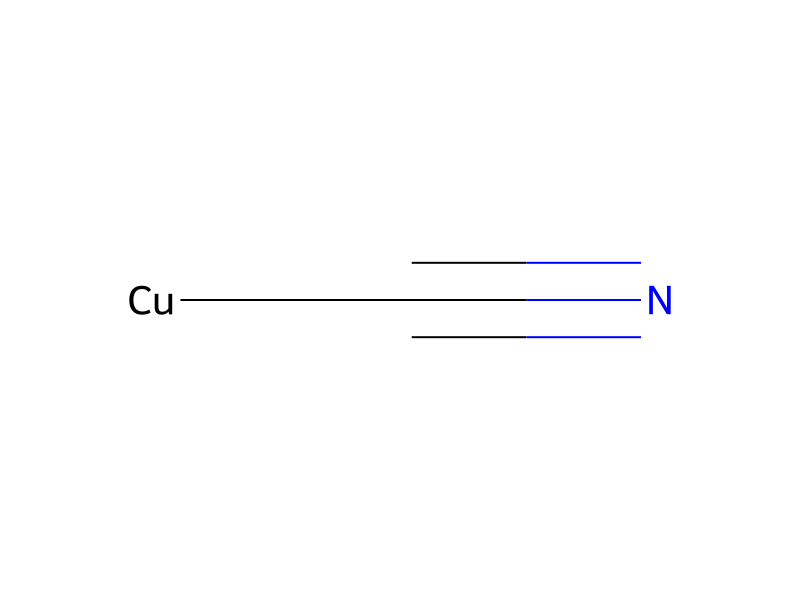
Br[C:2]1[C:7]([F:8])=[CH:6][C:5]([CH:9]2[O:14][CH2:13][CH:12]([CH2:15][CH2:16][CH2:17][CH2:18][CH3:19])[CH2:11][O:10]2)=[CH:4][C:3]=1[F:20].[C:21]([Cu])#[N:22]>CN1C(=O)CCC1>[C:21]([C:2]1[C:7]([F:8])=[CH:6][C:5]([C@H:9]2[O:14][CH2:13][C@H:12]([CH2:15][CH2:16][CH2:17][CH2:18][CH3:19])[CH2:11][O:10]2)=[CH:4][C:3]=1[F:20])#[N:22]Participants
Reactant 2

Product 1

Reagents, catalysts & solvents 1

Procedure
9.1 g (0.026 mol) of 2-(4'-bromo-3',5'-difluorophenyl)-5-pentyl-1,3-dioxane, 3.5 g (0.0039 mol) of CuCN and 78 cm3 of NMP were refluxed for 2 hours on a mantle heater. The reactant was cooled to room temperature, and after adding 10 cm3 of EDA, it was poured in ice water, extracted with hexane and washed with an aqueous EDA solution and water. The hexane was removed, the residue was treated in a silica gel column with chloroform as solvent, and the chloroform was removed. The residue was recrystallized from a mixture of methanol and water to obtain 1.7 g (0.006mol) of trans-2-(4'-cyano-3',5'-difluorophenyl)-5-pentyl-1,3-dioxane. The phase transition temperature of this compound as measured using DSC was as follows. ##STR16## (where, C indicates crystal, and I shows isotropic liquid).
Workup
- additionafter adding 10 cm3 of EDA, it
- extractionextracted with hexane
- washwashed with an aqueous EDA solution and water
- customThe hexane was removed
- additionthe residue was treated in a silica gel column with chloroform as solvent
- customthe chloroform was removed
- customThe residue was recrystallized from a mixture of methanol and water
Sources & evidence
- ORD record
- ord-4fd12524d7f245bc897bd100a60b3188
- Source dataset
- uspto-grants-1994_10
- Patent number
- US05354502
Reaction notes
Loading…