Triethylamine → Ethyl 4-benzyl-1-phenylpiperazine-2-carboxylate
Reaction equation

[C:1]1([NH:7][CH2:8][CH2:9][NH:10][CH2:11][C:12]2[CH:17]=[CH:16][CH:15]=[CH:14][CH:13]=2)[CH:6]=[CH:5][CH:4]=[CH:3][CH:2]=1.C(N(CC)CC)C.[CH2:25]([O:27][C:28](=[O:33])[CH:29](Br)[CH2:30]Br)[CH3:26]>C1(C)C=CC=CC=1>[C:1]1([N:7]2[CH2:8][CH2:9][N:10]([CH2:11][C:12]3[CH:17]=[CH:16][CH:15]=[CH:14][CH:13]=3)[CH2:30][CH:29]2[C:28]([O:27][CH2:25][CH3:26])=[O:33])[CH:2]=[CH:3][CH:4]=[CH:5][CH:6]=1Participants
5
Reactant 3

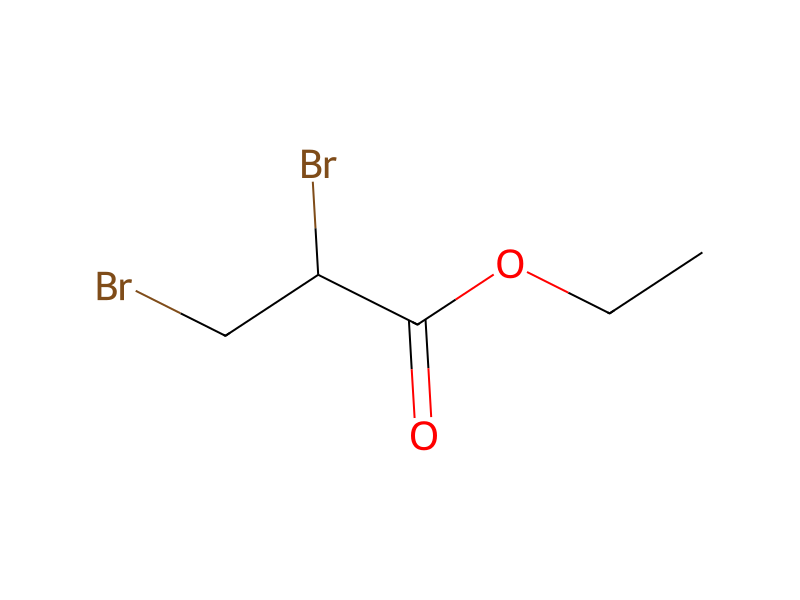

Product 1

Reagents, catalysts & solvents 1

Conditions
- Temperature
- 40 °C
Procedure
A mixture of this ethylenediamine (31 g, 0.137 mole) and triethylamine (28 g, 0.277 mole) was added dropwise over 30 minutes to a stirred solution of ethyl-2,3-dibromopropionate (35.0 g, 0.135 mole) dissolved in 200 mL of toluene and heated to 40° C. After the addition was complete, the reaction was heated at 80°-85° C. for 7 hours, cooled to room temperature, and partitioned between water and toluene. The organic layer was separated, dried, and stripped of all solvent under reduced pressure to yield 38 g of the crude product. Chromatographic purification gave 12.8 g of ethyl 1-phenyl-4-(phenylmethyl)-2-piperazinecarboxylate.
Workup
- additionAfter the addition
- temperaturethe reaction was heated at 80°-85° C. for 7 hours
- temperaturecooled to room temperature
- custompartitioned between water and toluene
- customThe organic layer was separated
- customdried
- customto yield 38 g of the crude product
- customChromatographic purification
Sources & evidence
- ORD record
- ord-1a03f8ea337e4aa89726d72833203f8a
- Source dataset
- uspto-grants-1994_10
- Patent number
- US05354747
Reaction notes
Loading…