Benzoic Acid → Cyclohexyl phenyl ketone
Reaction equation

[C:1]([OH:9])(=O)[C:2]1[CH:7]=[CH:6][CH:5]=[CH:4][CH:3]=1.[CH:10]1(C(O)=O)[CH2:15][CH2:14][CH2:13][CH2:12][CH2:11]1>O>[C:10]1([C:1]([CH:2]2[CH2:3][CH2:4][CH2:5][CH2:6][CH2:7]2)=[O:9])[CH:15]=[CH:14][CH:13]=[CH:12][CH:11]=1Participants
4
Reactant 2
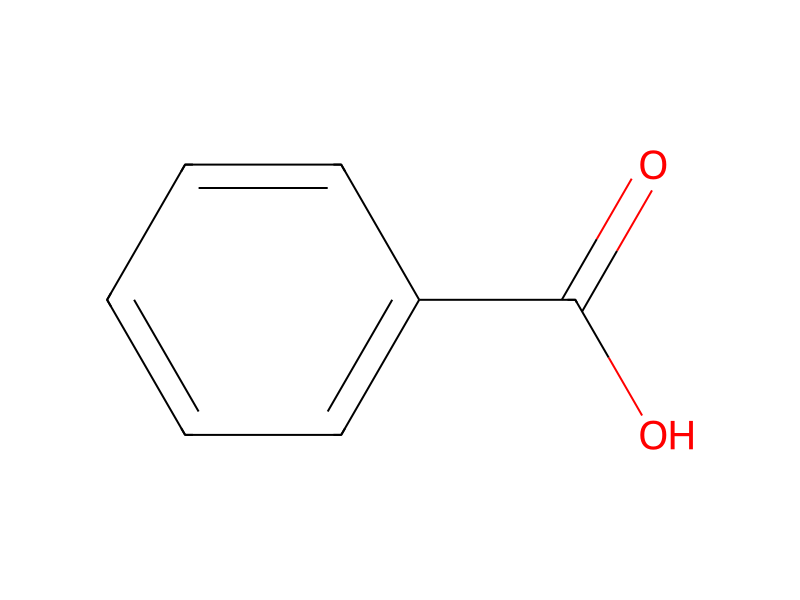

Product 1

Reagents, catalysts & solvents 1

Procedure
A mixture of 11.5 g/h of benzoic acid, 36 g/h of cyclohexanecarboxylic acid and 13 g/h of water was evaporated in an evaporator and passed, together with 10 l/h of nitrogen, at 450° C., over 100 ml of a catalyst which contained 2% by weight of potassium oxide, the remainder being anatase. The reaction gases were then cooled and were collected in a receiver. From the discharged two-phase mixture, the organic phase was analyzed by gas chromatography. The conversion of benzoic acid was 98%. The selectivity with respect to cyclohexyl phenyl ketone was 60%.
Workup
- customwas evaporated in an evaporator
- custompassed, together with 10 l/h of nitrogen, at 450° C., over 100 ml of a catalyst which
- customThe reaction gases
- temperaturewere then cooled
- customwere collected in a receiver
Sources & evidence
- ORD record
- ord-48466fdd9a864c38b24c54daee5fdb40
- Source dataset
- uspto-grants-1990_08
- Patent number
- US04950763
Reaction notes
Loading…