Water → Triapenthenol
Reaction equation

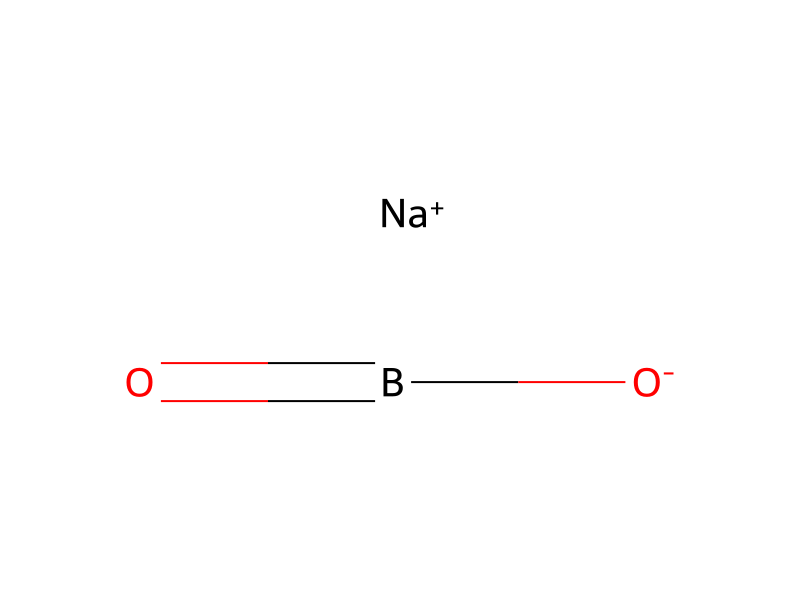
B([O-])=O.[Na+].[CH:5]1([CH:11]=[C:12]([N:19]2[CH:23]=[N:22][CH:21]=[N:20]2)[C:13](=[O:18])[C:14]([CH3:17])([CH3:16])[CH3:15])[CH2:10][CH2:9][CH2:8][CH2:7][CH2:6]1.O>O1CCCC1>[CH:5]1(/[CH:11]=[C:12](/[N:19]2[CH:23]=[N:22][CH:21]=[N:20]2)\[CH:13]([OH:18])[C:14]([CH3:17])([CH3:16])[CH3:15])[CH2:6][CH2:7][CH2:8][CH2:9][CH2:10]1Participants
Reactant 3


Product 1

Reagents, catalysts & solvents 1

Procedure
0.68 g (0.018 mol) of sodium boranate is added to a suspension of 5.2 g (0.018 mol) of S-2-(dibenzyl-hydroxymethyl)-pyrrolidine hydrochloride in 75 ml of absolute tetrahydrofuran at -30° C., with stirring. The temperature is allowed to rise gradually to 20° C. and stirring is continued at 20° C. for a further 2 hours. Thereafter, 3.15 g (0.012 mol) of the (E)-isomer of 1-cyclohexyl-4,4-dimethyl-2-(1,2,4-triazol-1-yl)-pent-1-en-3-one are added dropwise and the mixture is stirred at 40° C. for 20 hours. The reaction mixture is then poured into water. The resulting mixture is extracted with ethyl acetate and the combined organic phases are concentrated under reduced pressure. The residue which remains is chromatographed with a mixture of chloroform/ethyl acetate=4:1 on silica gel. 2.1 g (67% of theory) of the (-)-antipode of (E)-1-cyclohexyl-4,4-dimethyl-3-hydroxy-2-(1,2,4-triazol-1-yl)-pent-1-ene are obtained in this manner in the form of a crystalline product.
Workup
- customto rise gradually to 20° C.
- stirringstirring
- stirringthe mixture is stirred at 40° C. for 20 hours
- extractionThe resulting mixture is extracted with ethyl acetate
- concentrationthe combined organic phases are concentrated under reduced pressure
- customThe residue which remains is chromatographed with a mixture of chloroform/ethyl acetate=4:1 on silica gel
Sources & evidence
- ORD record
- ord-23f8f4fe2e884839a33a613e03f3e5de
- Source dataset
- uspto-grants-1990_08
- Patent number
- US04950767
Reaction notes
Loading…