Toluene → Isobutylbenzene
Reaction equation

[C:1]1([CH3:7])[CH:6]=[CH:5][CH:4]=[CH:3][CH:2]=1.[CH2:8]=[CH:9][CH3:10].C(O)(C)C>O>[CH2:7]([C:1]1[CH:6]=[CH:5][CH:4]=[CH:3][CH:2]=1)[CH:9]([CH3:10])[CH3:8]Participants
Reactant 3


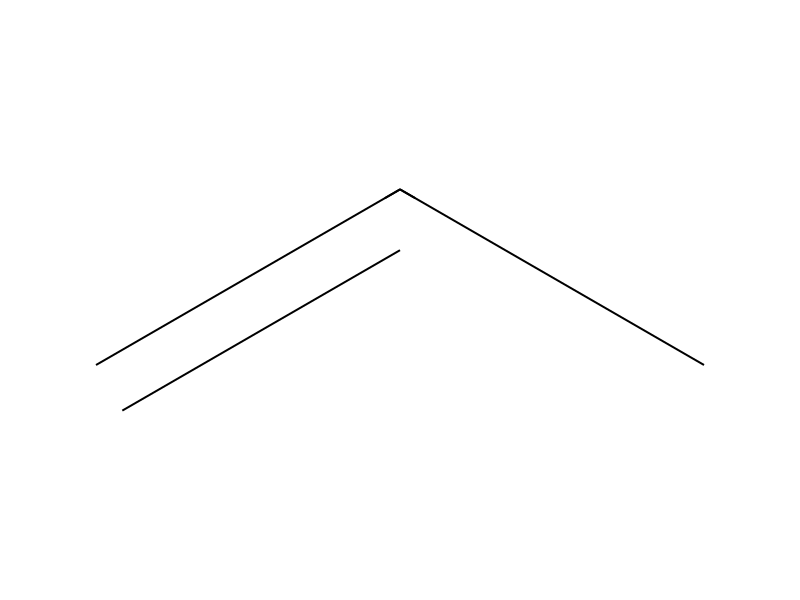
Product 1

Reagents, catalysts & solvents 1

Conditions
- Temperature
- 160 °C
Procedure
A 1-L Parr autoclave provided with a high shear turbine-type impeller was charged with 4.3g of NaK (an alloy having a K content of 78% by weight) and 428g of toluene. The mixture was heated to 160° C. under normal agitation, i.e., an agitator tip speed of 1.5 m/sec.; and the agitator tip speed was then increased to 5.7 m/sec. The mixture was agitated at this speed for 15 minutes, after which the temperature was increased to 190° C. Then 160 g of propene was fed over a period of 30 minutes while the temperature was maintained below 200° C. with cooling and the pressure below 2.8 MPa by regulating the propene feed rate. The autoclave was kept at 190° C. for one hour, and agitation was then slowed to normal. The NaK was deactivated by the addition of 12 g of isopropanol and 142 g of water. Analysis of the organic phase by gas chromatography showed that the reaction resulted in conversion to isobutylbenzene at the rate of 0.975 mol/hr. This compares with a conversion rate of only about 0.75 mol/hr. when diatomaceous earth- or potassium carbonate-supported NaK is employed as the catalyst and normal agitation conditions are maintained throughout the reaction.
Workup
- additionwas charged with 4.3g of NaK (an alloy
- temperatureand the agitator tip speed was then increased to 5.7 m/sec
- temperatureafter which the temperature was increased to 190° C
- temperaturewas maintained below 200° C.
- temperaturewith cooling
- waitThe autoclave was kept at 190° C. for one hour
Sources & evidence
- ORD record
- ord-d36dd341ce3a4a4f9a5fdd34118fafa6
- Source dataset
- uspto-grants-1990_08
- Patent number
- US04950831
Reaction notes
Loading…