Thionyl Chloride → HCID 86626008, compound
Reaction equation

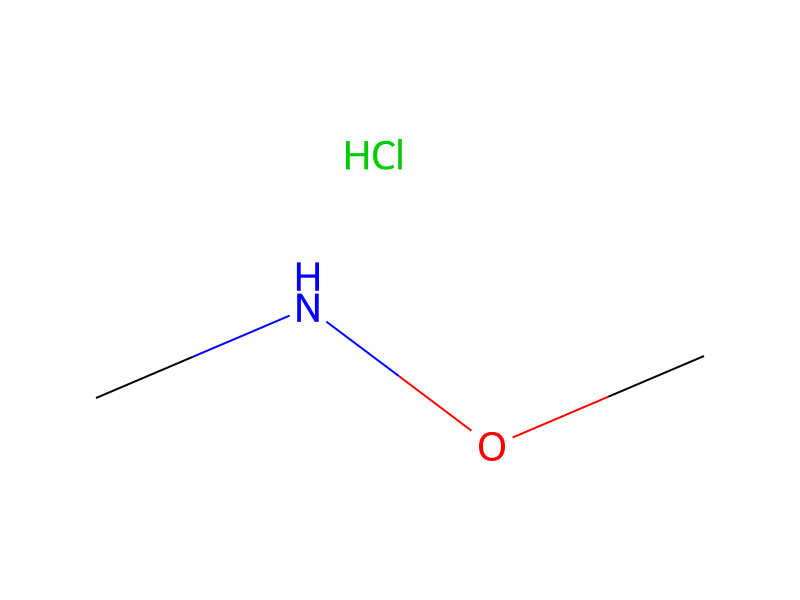
S(Cl)(Cl)=O.[CH:5]1[N:6]=[CH:7][N:8]2[CH2:13][CH2:12][O:11][CH:10]([C:14]3[CH:22]=[CH:21][C:17]([C:18]([OH:20])=O)=[CH:16][CH:15]=3)[C:9]=12.Cl.[CH3:24][NH:25][O:26][CH3:27].C(N(C(C)C)CC)(C)C>C(Cl)(Cl)Cl>[CH:5]1[N:6]=[CH:7][N:8]2[CH2:13][CH2:12][O:11][CH:10]([C:14]3[CH:15]=[CH:16][C:17]([C:18]([N:25]([O:26][CH3:27])[CH3:24])=[O:20])=[CH:21][CH:22]=3)[C:9]=12Participants





Conditions
- Temperature
- 2.5 °C
Procedure
9.30 mmol of thionyl chloride are added to a solution of 3.10 mmol of 4-(5,6-dihydro-8H-imidazo[5,1-c][1,4]oxazin-8-yl)benzoic acid in 5 ml of chloroform. The reaction mixture is heated to reflux for 3 hours and then evaporated. The residue is stripped with toluene and then taken up in 10 ml of dichloromethane. The reaction solution is cooled to 0-5° C., and 3.10 mmol of N,O-dimethylhydroxylamine hydrochloride, followed by 15.5 mmol of diisopropylethylamine, are added. The reaction mixture is stirred at room temperature for 16 hours and filtered through Hyflo, and the filtrate is evaporated. The title compound is obtained as a yellowish oil from the residue by flash chromatography (SiO2 60F). Rf=0.13 (dichloromethane-2M ammonia in ethanol 97:3); Rt=4.00.
Workup
- temperatureThe reaction mixture is heated
- temperatureto reflux for 3 hours
- customevaporated
- additionare added
- filtrationfiltered through Hyflo
- customthe filtrate is evaporated
Sources & evidence
- ORD record
- ord-273f69f4d40840a491e3c68422e30d60
- Source dataset
- uspto-grants-2010_09
- Patent number
- US07795253B2
Reaction notes
Loading…