Pyridine → 3-Azidopropyl 2-methylprop-2-enoate
Reaction equation

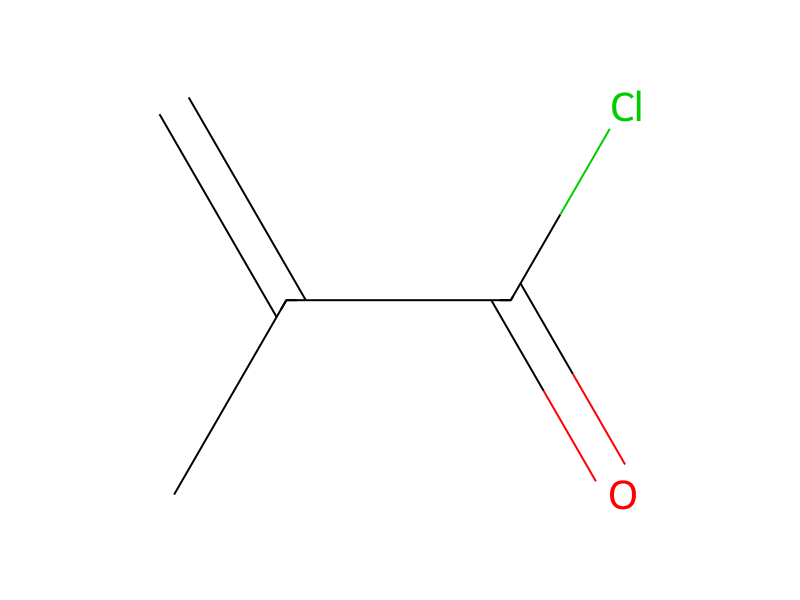
[C:1](Cl)(=[O:5])[C:2]([CH3:4])=[CH2:3].N1C=CC=CC=1.[N:13]([CH2:16][CH2:17][CH2:18][OH:19])=[N+:14]=[N-:15]>C(Cl)Cl>[C:1]([O:19][CH2:18][CH2:17][CH2:16][N:13]=[N+:14]=[N-:15])(=[O:5])[C:2]([CH3:4])=[CH2:3]Participants
Reactant 3


Product 1

Reagents, catalysts & solvents 1

Procedure
29 mL (0.3 mol) of methacryloyl chloride was added to a mixture of 100 mL methylene chloride and 50 mL of pyridine (both solvents had been dried over sodium sulfate overnight). The suspension was cooled in an ice-water bath and 18.6 mL (0.2 mol) of 3-azidopropanol was added over a period of 10 minutes. A clear solution was formed, which was kept in the cooling bath for another 1 hour and then at room temperature for 24 h. 50 mL of methylene chloride were then added, and the mixture was extracted with a solution of 50 mL HCl in 300 mL water followed by four 200-milliliter portions of water (NaCl had to be added to break the stable emulsion). The methylene chloride layer was dried over sodium sulfate (5 grams of sodium carbonate were added to react with the excess of methacrylic acid potentially present), and the solvent was removed under vacuum. The obtained liquid was distilled under reduced pressure (0.1 g of hydroquinone was added to prevent polymerization). The yield was 8.55 g (25%). The procedure needs to be optimized, but the monomer obtained by this procedure was very pure (NMR) and was used to study polymerization reactions.
Workup
- dry with materialhad been dried over sodium sulfate overnight)
- temperatureThe suspension was cooled in an ice-water bath
- customA clear solution was formed
- waitat room temperature for 24 h
- extractionthe mixture was extracted with a solution of 50 mL HCl in 300 mL water
- additionto be added
- dry with materialThe methylene chloride layer was dried over sodium sulfate (5 grams of sodium carbonate
- additionwere added
- customto react with the excess of methacrylic acid potentially present), and the solvent
- customwas removed under vacuum
- distillationThe obtained liquid was distilled under reduced pressure (0.1 g of hydroquinone was added to prevent polymerization)
- customthe monomer obtained by this procedure
- custompolymerization reactions
Sources & evidence
- ORD record
- ord-a94437ac6dc74a2593f5911a421d570b
- Source dataset
- uspto-grants-2010_09
- Patent number
- US07795355B2
Reaction notes
Loading…