Acrylonitrile → 6-chloro-2H-chromene-3-carbonitrile
Reaction equation

[Cl:1][C:2]1[CH:3]=[CH:4][C:5]([OH:10])=[C:6]([CH:9]=1)[CH:7]=O.[C:11](#[N:14])[CH:12]=[CH2:13].C1N2CCN(CC2)C1>CCOCC>[Cl:1][C:2]1[CH:9]=[C:6]2[C:5](=[CH:4][CH:3]=1)[O:10][CH2:13][C:12]([C:11]#[N:14])=[CH:7]2Participants
5
Reactant 3


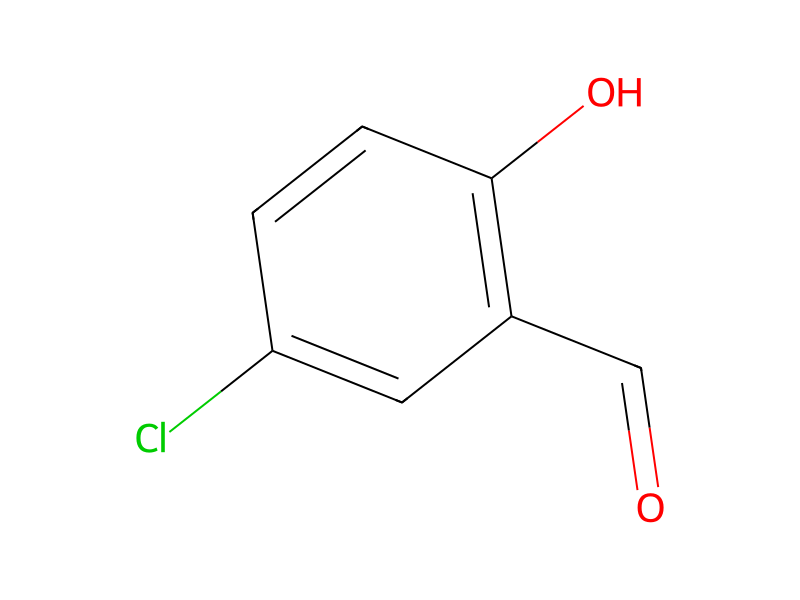
Product 1

Reagents, catalysts & solvents 1

Procedure
5-chloro-2-hydroxy-benzaldehyde Compound 15a (10.0 mmol, 1.7 g), acrylonitrile (50.0 mmol, 2.14 mL) and DABCO (2.33 mmol, 0.26 g) were mixed together and heated to reflux overnight using an oil bath. After the flask was cooled to room temperature, Et2O (100 mL) was added and the Et2O layer was washed with 10% NaOH solution followed by 1N HCl and brine. The organic layer was dried over MgSO4, filtered and the solvent was removed in vacuo to obtain 6-chloro-2H-chromene-3-carbonitrile Compound 15b as a yellow solid (1.42 g, 74%), which was used in the next step without further purification (the preceding was described in Wise, L. et al. J. Med. Chem., 1988, 31, 688).
Workup
- temperatureheated
- temperatureto reflux overnight
- washthe Et2O layer was washed with 10% NaOH solution
- dry with materialThe organic layer was dried over MgSO4
- filtrationfiltered
- customthe solvent was removed in vacuo
Sources & evidence
- ORD record
- ord-e79bc47ab3384ad09c201c43a75389e1
- Source dataset
- uspto-grants-2010_09
- Patent number
- US07799824B2
Reaction notes
Loading…