Sodium Hydroxide → Diisopropylethylamine
Reaktionsgleichung

[N:1]1[CH:5]=[CH:4][C:3](=[O:6])[N:2]=1.[Li].[OH-].[Na+].[CH2:10](N=C=NCCCN(C)C)[CH3:11].O[N:22]1[C:26]2[CH:27]=CC=C[C:25]=2N=N1.F[P-](F)(F)(F)(F)F.N1(O[P+](N2CCCC2)(N2CCCC2)N2CCCC2)C2C=CC=CC=2N=N1>C(Cl)Cl.CN(C)C=O.C(O)C.CO.O1CCOCC1.O1CCCC1>[CH:4]([N:22]([CH:26]([CH3:25])[CH3:27])[CH2:10][CH3:11])([CH3:5])[CH3:3].[N:1]1[CH:5]=[CH:4][C:3](=[O:6])[N:2]=1Komponenten
Edukt 6

Produkt 2
Reagenzien, Katalysatoren, Lösungsmittel 6
Versuchsvorschrift
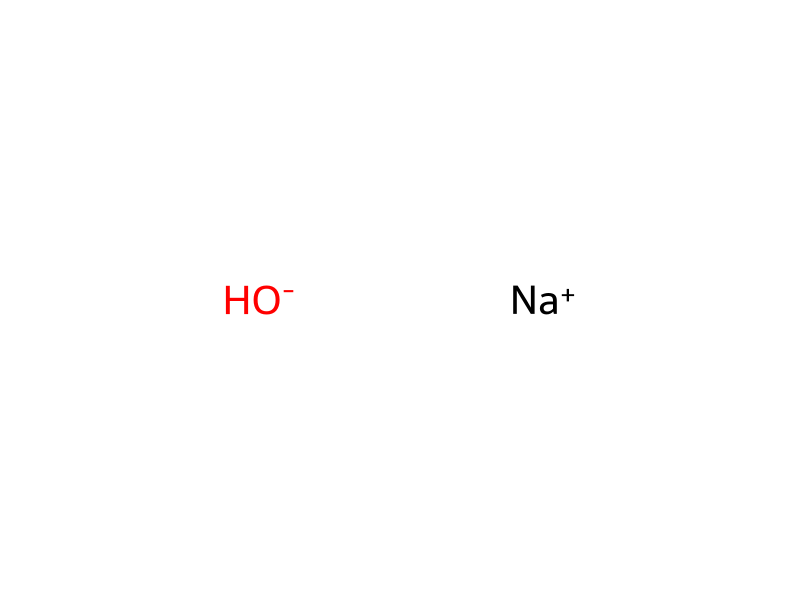
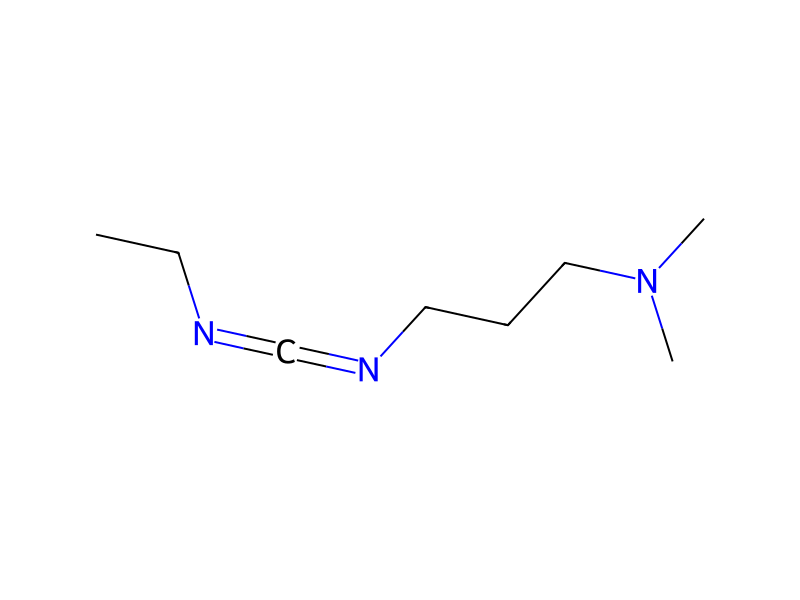
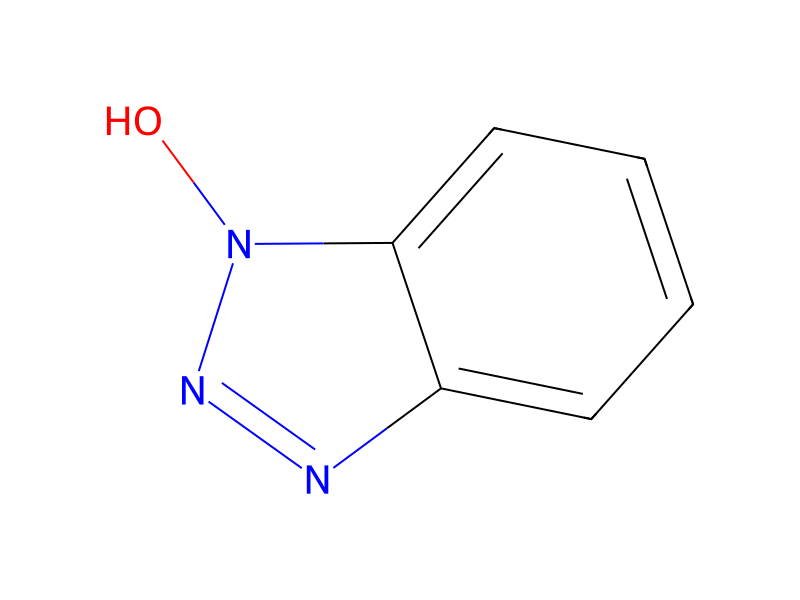
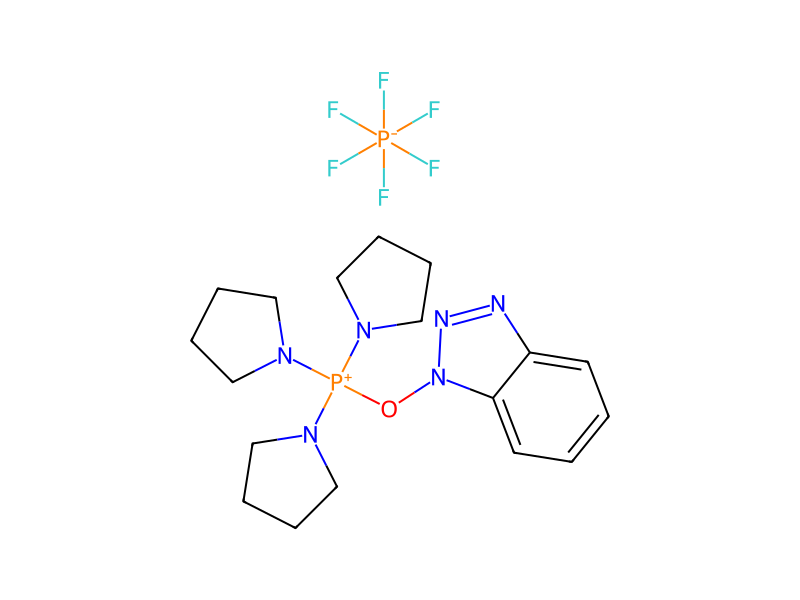
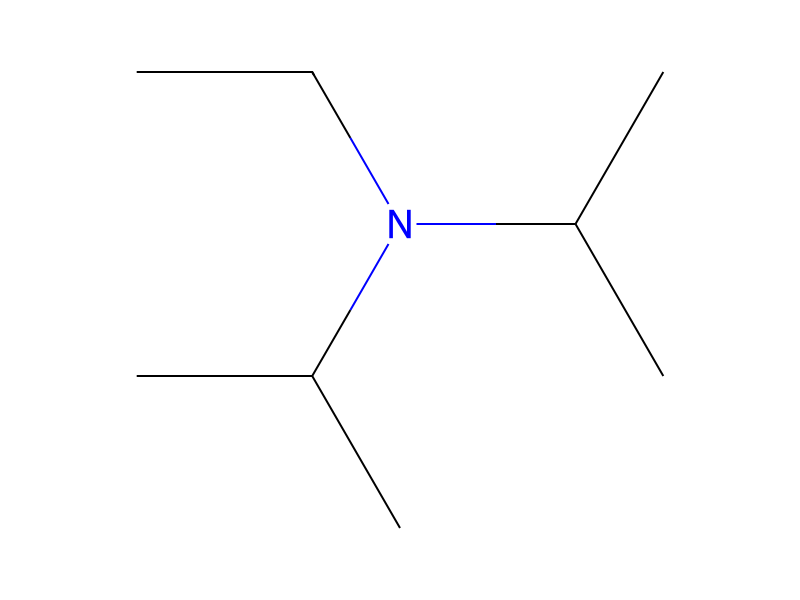
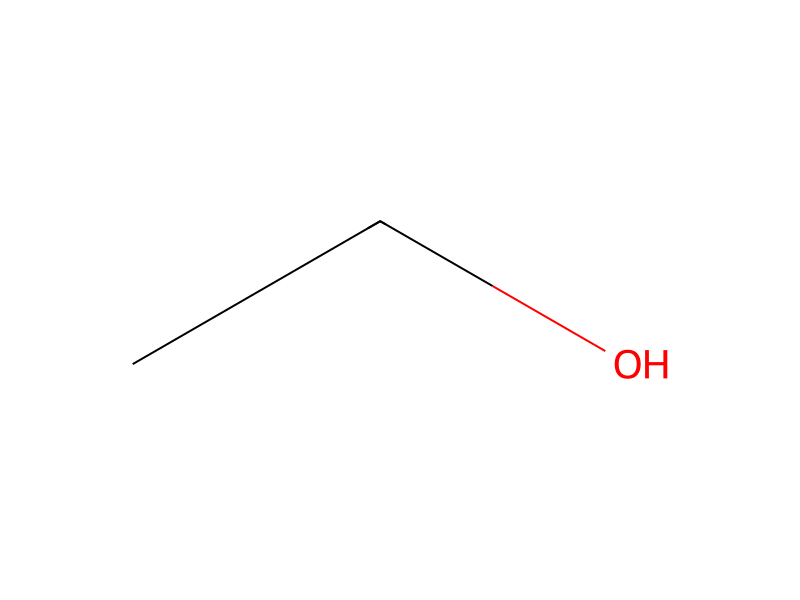
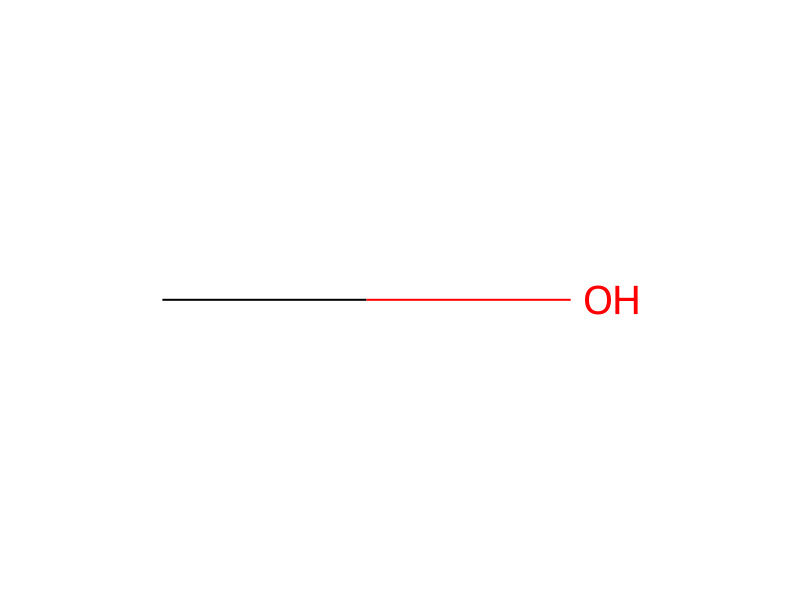
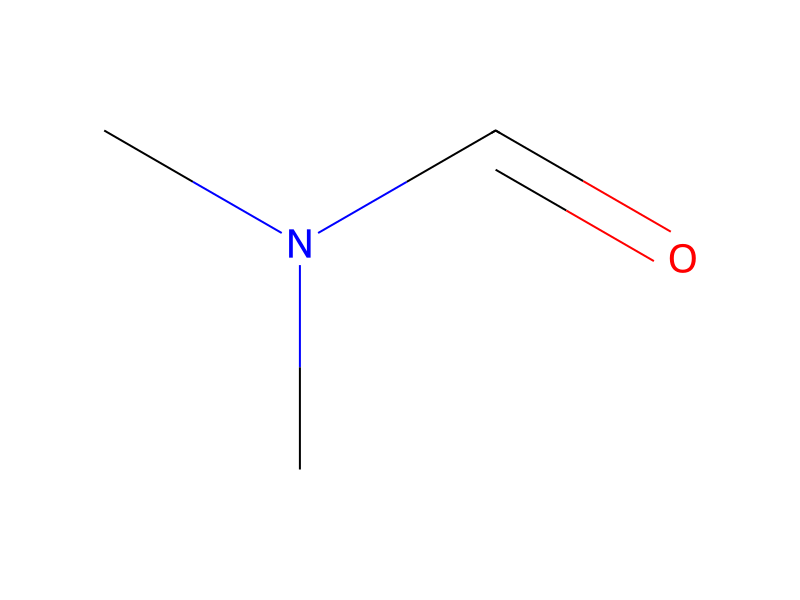
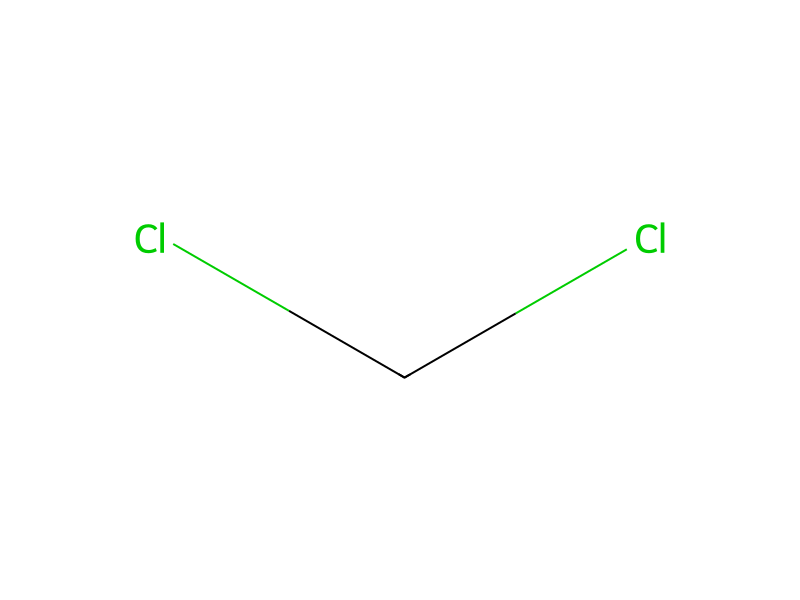
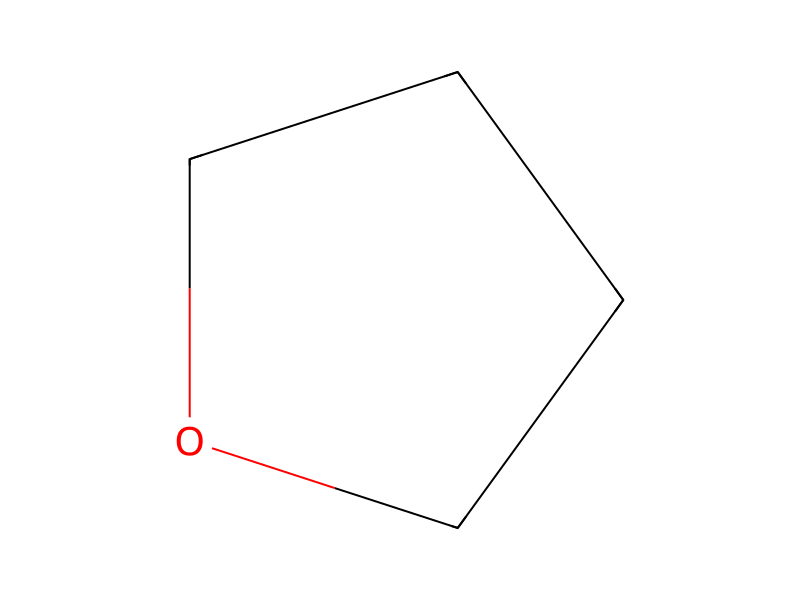
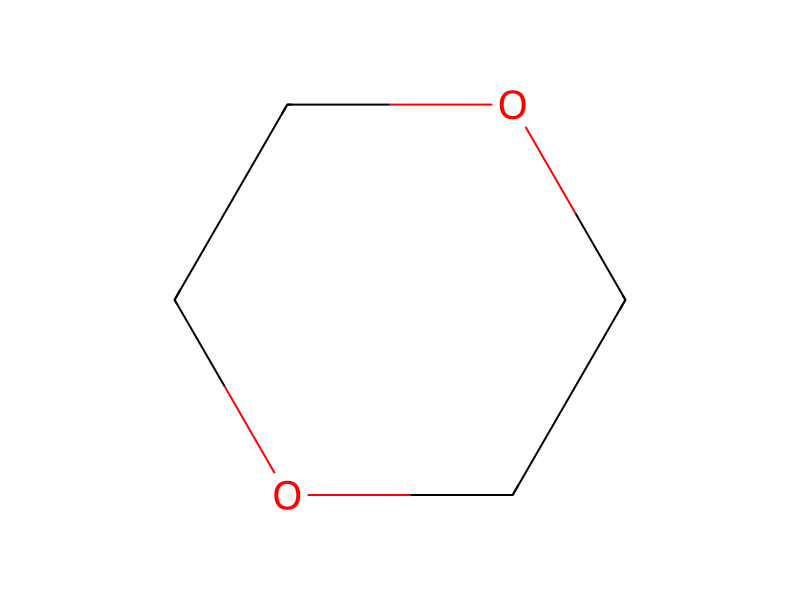
Condensation of the β-ketoester 1 and benzyl hydrazine 2 described in Scheme 3 is carried out by heating the two components in a solvent such as acetic acid or acetonitrile for 1-8 h to give the pyrazolone 6. Elaboration at this point to β-alanine ester 7 can be achieved by saponification of the ester 6 using a base such as aqueous lithium or sodium hydroxide in a polar solvent such as tetrahydrofuran, dioxane, methanol, ethanol or a mixture of similar solvents. Coupling of the beta alanine ester 8 is then achieved using 1-ethyl-3-(3-dimethylaminopropyl)-carbodiimide (EDC) and 1-hydroxybenzotriazole (HOBt) or benzotriazole-1-yloxytrispyrrolidinophosphonium hexafluorophosphate (PyBOP) and a base, generally diisopropylethylamine, in a solvent such as N,N-dimethylformamide (DMF) or methylene chloride for 3 to 48 hours at ambient temperature to yield the compound 7. Pyrazolone 7 is then treated with triflic anhydride in a polar aprotic solvent such as THF in the presence of a base such as triethylamine at −78° C. to room temperature to afford the intermediate II. The product is purified from unwanted side products by recrystallization, trituration, preparative thin layer chromatography, flash chromatography on silica gel as described by W. C. Still et al, J. Org. Chem., 43, 2923, (1978), or HPLC. Purification of intermediates is achieved in the same manner. If the intermediate II is racemic (i.e., R3 is not hydrogen), the compound can be resolved via chiral hplc using either normal phase or supercritical fluid conditions.
Aufarbeitung
- additiona mixture of similar solvents
Quellen und Nachweise
- ORD-Eintrag
- ord-cd986a3f118a489081fdfa52be84aedb
- Quelldatensatz
- uspto-grants-2010_09
- Patentnummer
- US07799818B2
Notizen zur Reaktion
Wird geladen…