Sodium Chloride → Acetic acid, azido-, ethyl ester
Reaction equation

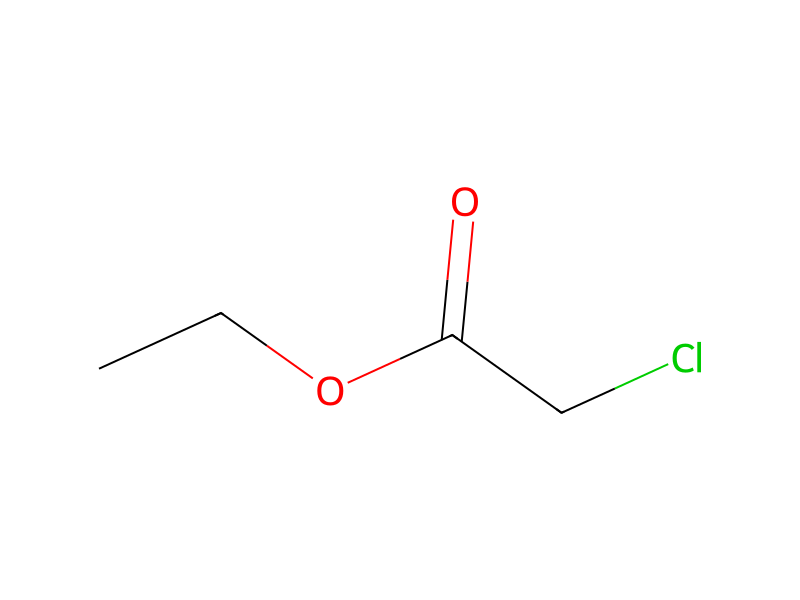
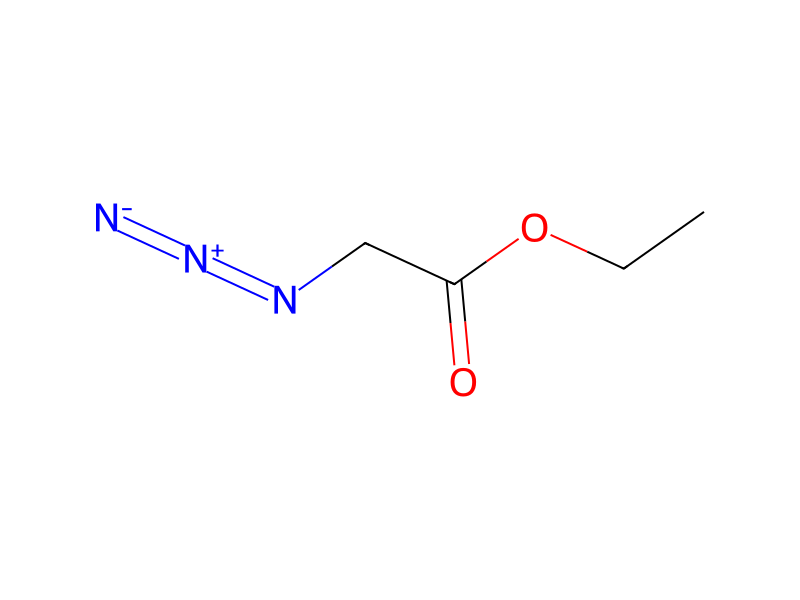
Cl[CH2:2][C:3]([O:5][CH2:6][CH3:7])=[O:4].[N-:8]=[N+:9]=[N-:10].[Na+].C(Cl)Cl.[Cl-].[Na+]>CCCCCCCC[N+](CCCCCCCC)(CCCCCCCC)C.[Cl-].O>[N:8]([CH2:2][C:3]([O:5][CH2:6][CH3:7])=[O:4])=[N+:9]=[N-:10]Participants
7





Procedure
A solution of 55.7 grams (0.45 moles) of 99% pure ethyl chloroacetate (Aldrich Chemical Company, Milwaukee, Wis.), 0.64 grams(1.6 millimoles) of Aliquat 336 and 30.16 grams (0.46 moles) of sodium azide (Aldrich) in 50 ml. of methylene chloride and 50 ml. of water was heated to reflux for 16 hours in a 250 ml. round bottom 3-neck flask. The mixture was allowed to cool, whereupon an additional 30 ml. of water was added to dissolve the precipitated sodium chloride. The organic phase was separated and the aqueous phase was washed twice with 10 ml. aliquots of methylene chloride. The aqueous phase was discarded and the organic phases were combined and used as a solvent for the following reaction.
Workup
- temperatureto reflux for 16 hours in a 250 ml
- temperatureto cool, whereupon an additional 30 ml
- customThe organic phase was separated
- washthe aqueous phase was washed twice with 10 ml
- customused as a solvent for the following reaction
Sources & evidence
- ORD record
- ord-9d8cd6617ec4458494a69ebfe2b048e4
- Source dataset
- uspto-grants-1985_09
- Patent number
- US04539422
Reaction notes
Loading…