4-Phenylbutyric Acid → HCID 54035213, compound
Reaction equation

CN1CCOCC1.[C:8]1([CH2:14][CH2:15][CH2:16][C:17]([OH:19])=O)[CH:13]=[CH:12][CH:11]=[CH:10][CH:9]=1.Cl.[CH2:21]([O:28][C:29](=[O:35])[C@@H:30]1[CH2:34][CH2:33][CH2:32][NH:31]1)[C:22]1[CH:27]=[CH:26][CH:25]=[CH:24][CH:23]=1.C1CCC(N=C=NC2CCCCC2)CC1>ClCCl>[CH2:21]([O:28][C:29](=[O:35])[C@@H:30]1[CH2:34][CH2:33][CH2:32][N:31]1[C:17](=[O:19])[CH2:16][CH2:15][CH2:14][C:8]1[CH:9]=[CH:10][CH:11]=[CH:12][CH:13]=1)[C:22]1[CH:23]=[CH:24][CH:25]=[CH:26][CH:27]=1Participants
6
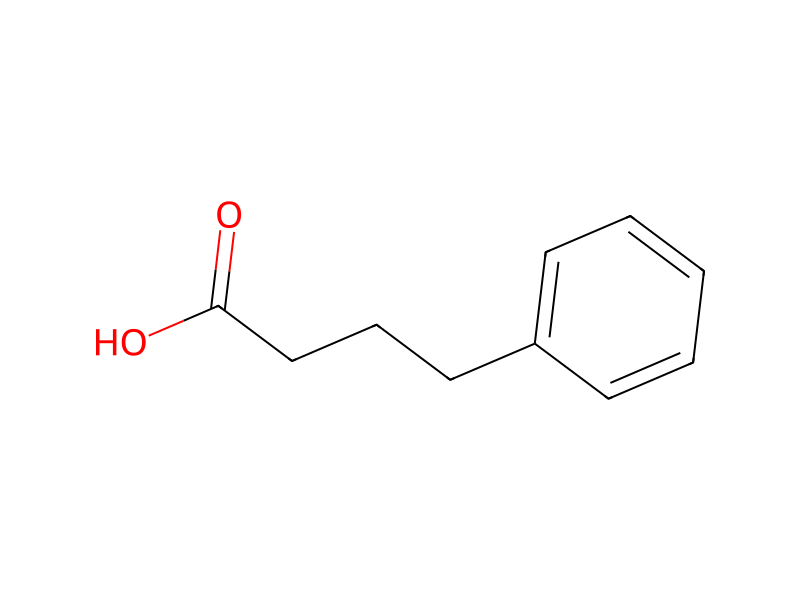





Conditions
- Temperature
- -25 °C
Procedure
N-Methylmorpholine (3.4 ml) and 4-phenylbutyric acid (5.02 g) were added to L-proline benzyl ester hydrochloride (7.37 g) in dichloromethane (80 ml) under ice-cooling. The mixture was cooled to -25° C., added with DCC (6.31 g) and stirred at room temperature for 16 hours. The resultant dicyclohexylurea was filtered off and the filtrate was concentrated. The residue was purified by silica gel column chromatography (eluate: chloroform-methanol) to give 9.42 g of N-(4-phenylbutyryl)-L-proline benzyl ester.
Workup
- temperaturecooling
- filtrationThe resultant dicyclohexylurea was filtered off
- concentrationthe filtrate was concentrated
- customThe residue was purified by silica gel column chromatography (eluate: chloroform-methanol)
Sources & evidence
- ORD record
- ord-7712e706351d4f76b8d2ccafb8ed6c35
- Source dataset
- uspto-grants-1996_04
- Patent number
- US05506256
Reaction notes
Loading…