Ammonia → 3-Cyano-3-(3,4-dichlorophenyl)propionic acid
Reaction equation

[Cl:1][C:2]1[CH:3]=[C:4]([CH2:9][C:10]#[N:11])[CH:5]=[CH:6][C:7]=1[Cl:8].Cl[CH2:13][C:14]([O-:16])=[O:15].[Na+].N.[NH2-].[Na+]>>[C:10]([CH:9]([C:4]1[CH:5]=[CH:6][C:7]([Cl:8])=[C:2]([Cl:1])[CH:3]=1)[CH2:13][C:14]([OH:16])=[O:15])#[N:11]Participants
5



Procedure
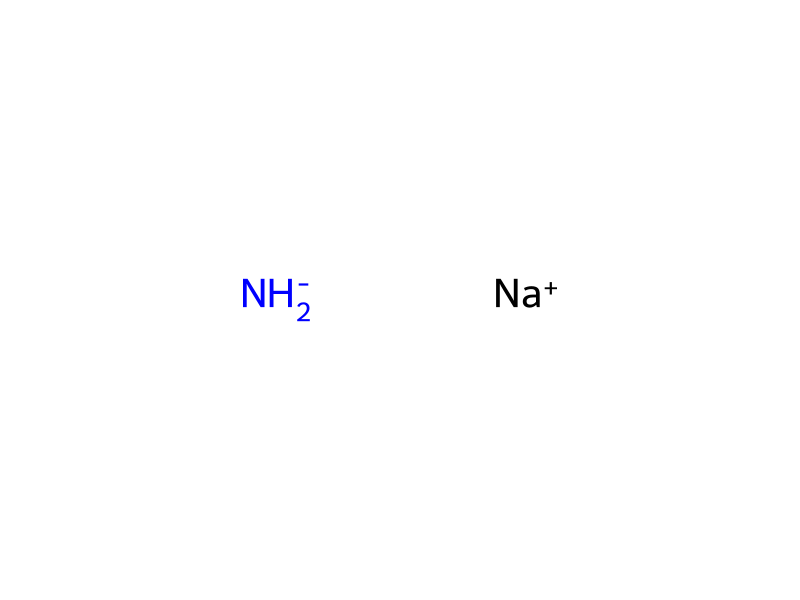
A mixture of 93 g (0.50 mol) of 3,4-dichlorophenylacetonitrile and 64 g (0.55 mol) of sodium chloroacetate is reacted for 4 hours at -33° C. in 500 ml of liquid ammonia, in the presence of 21 g (0.54 mol) of sodium amide. After evaporation of the ammonia, the residue is taken up with water and then with isopropyl ether and is acidified to pH<3 with hydrochloric acid. The organic phase is washed with water to pH>3, separated off by decantation, dried over magnesium sulfate and concentrated to dryness. The residue is solidified in toluene and characterized by proton NMR. M.p.=106° C.
Workup
- customAfter evaporation of the ammonia
- washThe organic phase is washed with water to pH>3
- customseparated off by decantation
- dry with materialdried over magnesium sulfate
- concentrationconcentrated to dryness
Sources & evidence
- ORD record
- ord-e6d87503b10142768c004a79747fc494
- Source dataset
- uspto-grants-1996_04
- Patent number
- US05512680
Reaction notes
Loading…