Phosphoric Acid → HCID 57558445, compound
Reaction equation

[OH:1][C:2]1[CH:7]=[CH:6][CH:5]=[C:4]([OH:8])[C:3]=1[C:9](=[O:12])[CH2:10][CH3:11].OP(O)(O)=O.B(F)(F)F.CCOCC.[CH3:27][C:28](=[CH2:30])[CH3:29].[OH-].[NH4+]>ClCCl>[C:28]([O:1][C:2]1[CH:7]=[CH:6][CH:5]=[C:4]([OH:8])[C:3]=1[C:9](=[O:12])[CH2:10][CH3:11])([CH3:30])([CH3:29])[CH3:27]Participants

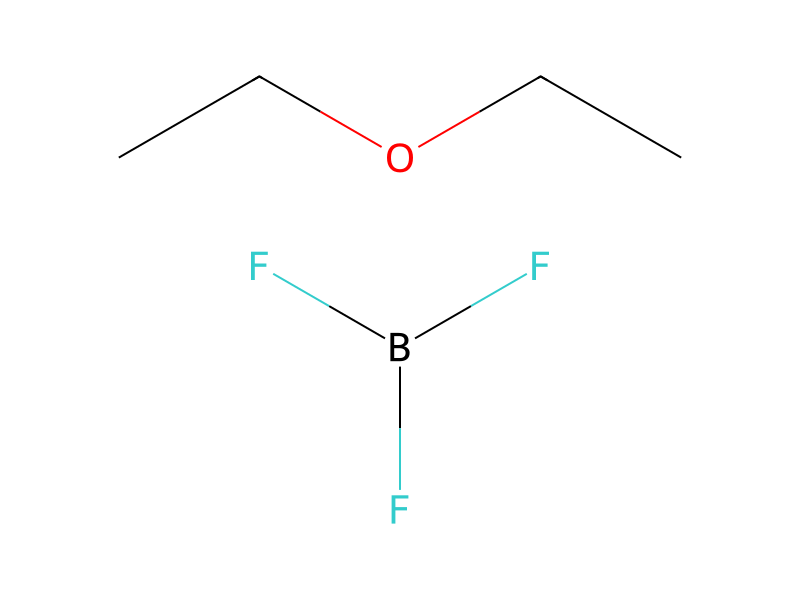





Conditions
- Temperature
- -75 °C
Procedure
To a 100 mL round bottom flask is added 2′,6′dihydroxypropiophenone (25 g, 0.15 mol) and to it is then added dichloromethane (50 mL). This is then cooled to −75° C. and then 2.6 mL of H3PO4 is added to it followed by 6.22 mL of boron trifluoride etherate and then isobutylene (125 mL). The reaction is then stirred at −75° C. for 1.5 hrs and then at room temperature overnight. The reaction mixture is then poured into a 2N ammonium hydroxide solution (200 mL) and extracted with dichloromethane. The organic layer is then washed with water and then with brine and dried over sodium sulfate and filtered. The crude residue obtained after concentration of the filtrate is purified by flash chromatography using silica gel (ethyl acetate:hexanes) to afford the above product.
Workup
- customat room temperature
- customovernight
- extractionextracted with dichloromethane
- washThe organic layer is then washed with water
- dry with materialwith brine and dried over sodium sulfate
- filtrationfiltered
Sources & evidence
- ORD record
- ord-9d97ec942ecb43a2afbd6b809b1b3742
- Source dataset
- uspto-grants-2009_02
- Patent number
- US07485283B2
Reaction notes
Loading…