Hydrochloric Acid → 2,4-Dihydroxybenzophenone
Reaction equation

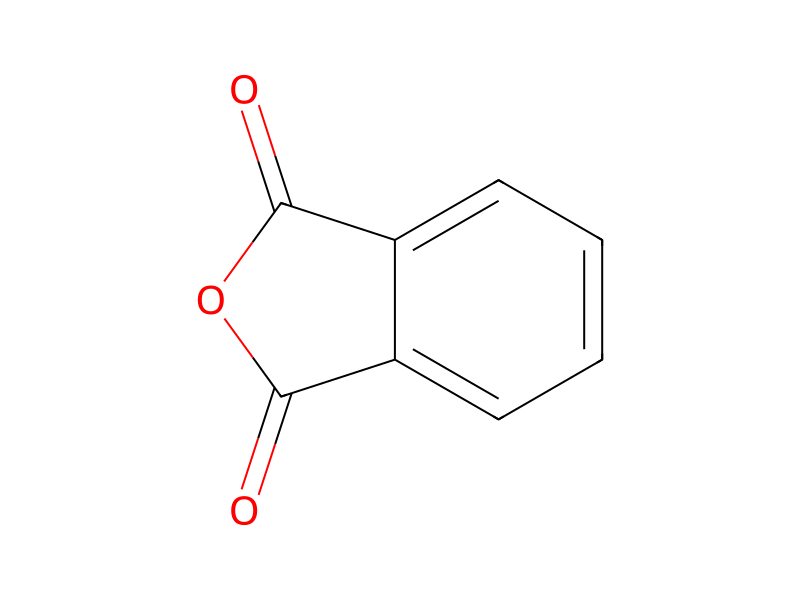
C[C:2]1[C:8]([OH:9])=[CH:7][CH:6]=[CH:5][C:3]=1[OH:4].C1(=O)O[C:13](=[O:14])[C:12]2=[CH:16][CH:17]=[CH:18][CH:19]=[C:11]12.[Cl-].[Al+3].[Cl-].[Cl-].Cl>[N+](C1C=CC=CC=1)([O-])=O>[CH:18]1[CH:17]=[CH:16][C:12]([C:13]([C:7]2[CH:6]=[CH:5][C:3]([OH:4])=[CH:2][C:8]=2[OH:9])=[O:14])=[CH:11][CH:19]=1Participants
Reactant 4



Product 1

Reagents, catalysts & solvents 1

Conditions
- Temperature
- 0 °C
Procedure
Under an argon atmosphere, 2-methylresorcinol (10.0 g, 80.6 mmol) and phthalic anhydride (11.2 g, 75.6 mmol) were combined in dry nitrobenzene (250 mL). The mixture was cooled to 0° C. and aluminum(III) chloride (23.5 g, 176 mmol) was added in one portion. The resulting dark olive slurry was allowed to warm to room temperature and stirred for an additional 16 h under argon. The reaction was poured into a vigorously stirring mixture of hexanes (300 mL) and 1 M HCl (1 L). The precipitate was filtered and recrystallized twice from methanol/water to afford benzophenone 1 as a beige powder (16.0 g, 78% yield). 1H NMR (CD3OD, 500 MHz): δ 8.05 (1 H, dd, J1=8.0 Hz, J2=1.0 Hz), 7.62 (2 H, dt, J1=33.0 Hz, J2=9.0 Hz), 7.33 (1 H, d, J=7.5 Hz), 6.74 (1 H, d, J=8.5 Hz), 6.20 (1 H, d, J=8.5 Hz), 2.05 (3 H, s). HRMS (ESI) calcd for [M−H]− 271.0601, found 271.0601.
Workup
- temperatureto warm to room temperature
- additionThe reaction was poured into
- stirringa vigorously stirring
- filtrationThe precipitate was filtered
- customrecrystallized twice from methanol/water
Sources & evidence
- ORD record
- ord-dd7dfa11b03e465ebe25cc3b0e57294f
- Source dataset
- uspto-grants-2009_02
- Patent number
- US07488820B2
Reaction notes
Loading…