2,5-Dibromopyridine → 1-(5-Bromopyridin-2-yl)-4-(propan-2-yl)piperazine
Reaction equation

Br[C:2]1[CH:7]=[CH:6][C:5]([Br:8])=[CH:4][N:3]=1.[CH:9]([N:12]1[CH2:17][CH2:16][NH:15][CH2:14][CH2:13]1)([CH3:11])[CH3:10].C1CCN2C(=NCCC2)CC1>O>[Br:8][C:5]1[CH:6]=[CH:7][C:2]([N:15]2[CH2:16][CH2:17][N:12]([CH:9]([CH3:11])[CH3:10])[CH2:13][CH2:14]2)=[N:3][CH:4]=1Participants
5
Reactant 3

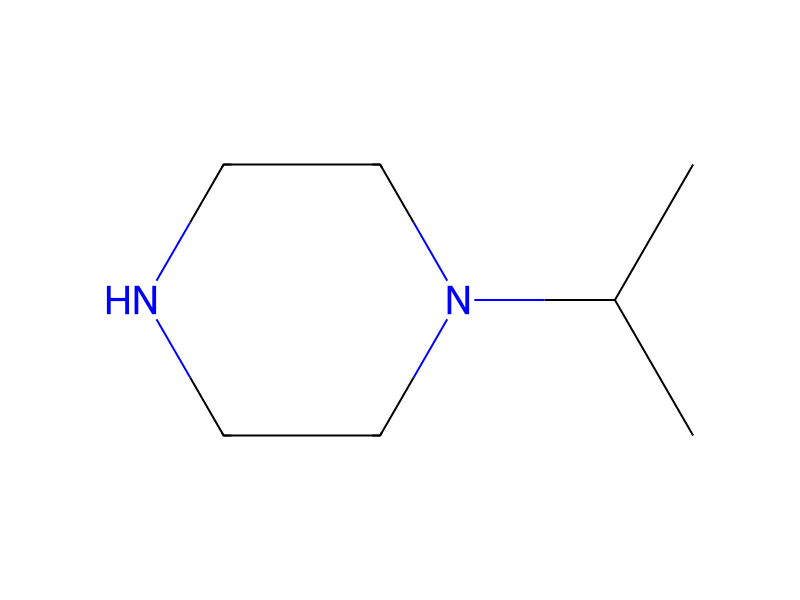

Product 1

Reagents, catalysts & solvents 1

Conditions
- Temperature
- 100 °C
Procedure
A solution containing 12.1 g of 2,5-dibromopyridine (51.1 mmol), 8.8 ml of 1-isopropylpiperazine (61.5 mmol) and 9.2 ml of DBU (61.5 mmol) is stirred overnight at 100° C. The reaction mixture is returned to ambient temperature and the solution is diluted with water and extracted with ethyl acetate. The organic phases are collected, washed with brine, dried (MgSO4) and evaporated under reduced pressure. The residue is chromatographed on an SiO2 column, eluting with a mixture of CH2Cl2/MeOH 98/2 and then 96/4, to yield the title product.
Workup
- customis returned to ambient temperature
- extractionextracted with ethyl acetate
- customThe organic phases are collected
- washwashed with brine
- dry with materialdried (MgSO4)
- customevaporated under reduced pressure
- customThe residue is chromatographed on an SiO2 column
- washeluting with a mixture of CH2Cl2/MeOH 98/2
Sources & evidence
- ORD record
- ord-e240ed1691f74b2eb57b46dcd73a987c
- Source dataset
- uspto-grants-2009_02
- Patent number
- US07494995B2
Reaction notes
Loading…