Dicyclohexylcarbodiimide → N,N'-Dicyclohexylurea
Reaction equation

N1(C2C=CN=CC=2)CCCC1.[O:12](C1C=CC(OCCO)=CC=1)C1C=CC=CC=1.FC1(F)CC1CC(O)=O.[CH:38]1([N:44]=[C:45]=[N:46][CH:47]2[CH2:52][CH2:51][CH2:50][CH2:49][CH2:48]2)[CH2:43][CH2:42][CH2:41][CH2:40][CH2:39]1>C(Cl)Cl>[CH:47]1([NH:46][C:45]([NH:44][CH:38]2[CH2:39][CH2:40][CH2:41][CH2:42][CH2:43]2)=[O:12])[CH2:52][CH2:51][CH2:50][CH2:49][CH2:48]1Participants

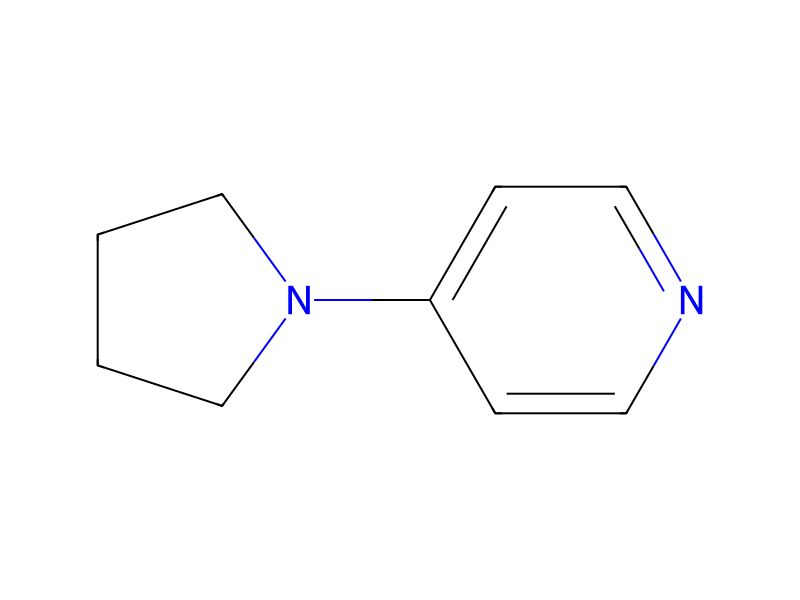


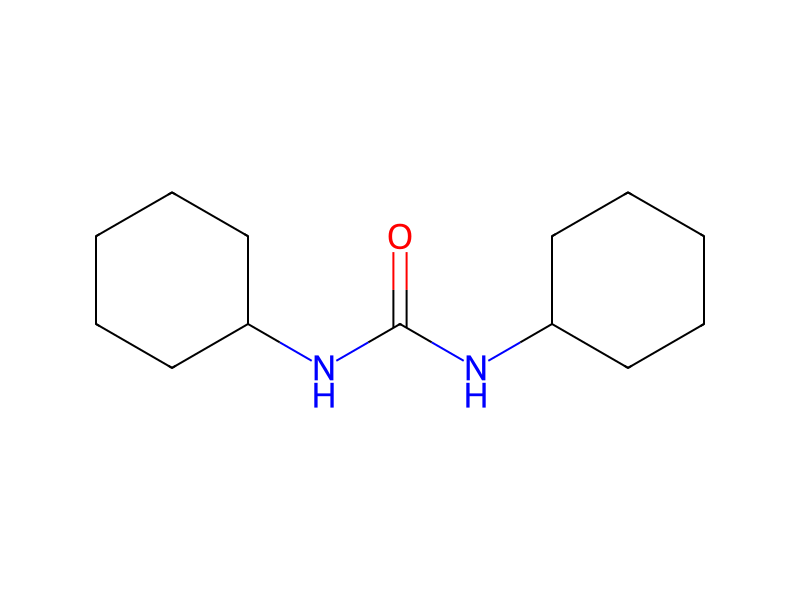

Conditions
- Temperature
- 0 °C
Procedure
0.1 g of 4-pyrrolidinopyridine and 2.53 g of 2-(4-phenoxyphenoxy)-ethanol are added to a solution of 1.5 g of 2-(2,2-difluorocyclopropyl)-acetic acid in 20 ml of methylene chloride, and the mixture is cooled to 0° C. At a temperature of from 0° C. to +5° C., a total of 2.5 g of N,N'-dicyclohexylcarbodiimide is added in portions, the ice-cooling is removed and the reaction mixture is allowed to warm to room temperature over a period of 5 hours with stirring. The N,N'-dicyclohexylurea obtained as precipitate is separated off and discarded. The supernatant solution is washed twice with 10 ml of water each time, dried over magnesium sulfate and concentrated by evaporation. The residue is purified by column chromatogaphy on silica gel (eluant: hexane/ethyl acetate, 85:15), yielding pure 2-(2,2-difluorocyclopropyl)-acetic acid 2-(4-phenoxyphenoxy)-ethyl ester in the form of a yellowish oil having a refractive index of nD22 : 1.5309.
Workup
- customis removed
- temperatureto warm to room temperature over a period of 5 hours
Sources & evidence
- ORD record
- ord-d795d8f87d914874bfd3426394c85519
- Source dataset
- uspto-grants-1994_07
- Patent number
- US05326901
Reaction notes
Loading…