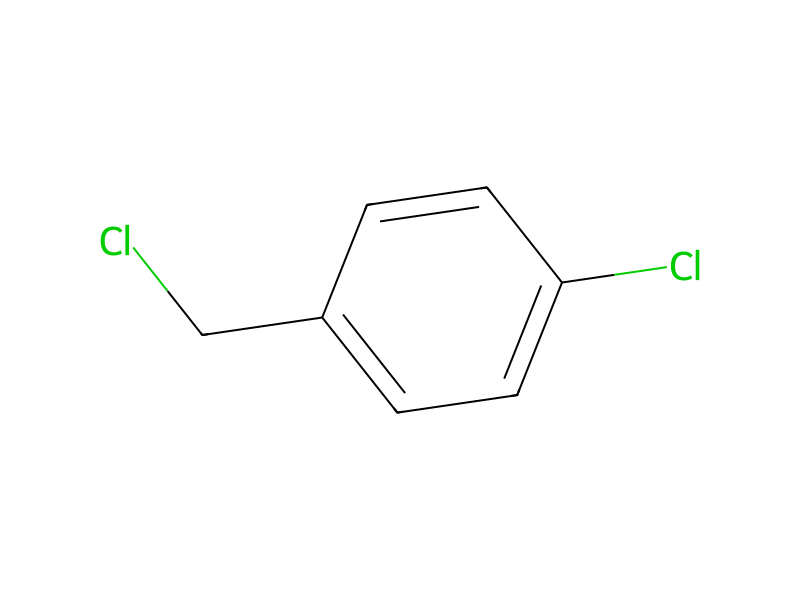
1-Chloro-4-(chloromethyl)benzene → HCID 19016807, compound
Reaction equation

[Cl:1][C:2]1[CH:9]=[CH:8][C:5]([CH2:6]Cl)=[CH:4][CH:3]=1.[Br:10][C:11]1[S:25][C:14]2[S:15][CH2:16][CH2:17][C:18]3[C:19](=[N:20][NH:21][C:22](=[O:24])[CH:23]=3)[C:13]=2[CH:12]=1>>[Br:10][C:11]1[S:25][C:14]2[S:15][CH2:16][CH2:17][C:18]3[C:19](=[N:20][N:21]([CH2:6][C:5]4[CH:8]=[CH:9][C:2]([Cl:1])=[CH:3][CH:4]=4)[C:22](=[O:24])[CH:23]=3)[C:13]=2[CH:12]=1Participants
3


Procedure
The reaction and procedure are conducted in the same manner as in Example 36 using 4-chlorobenzylchloride in place of methyl iodide and using 9-bromo-5,6-dihydrothieno[2',3':2,3]thiepino[4,5-c]pyridazin-3(2H)-one in place of 9-ethyl-5,6-dihydrothieno[2',3':2,3]thiepino[4,5-c]pyridazin-3(2H)-one as used in Example 36 to give 9-bromo-2-(4-chlorobenzyl)-5,6-dihydrothieno[2',3':2,3]thiepino[4,5-c]pyridazin-3(2H)-one as white crystals, melting at 152°-154° C.
Workup
- customThe reaction and procedure
Sources & evidence
- ORD record
- ord-ed375d4098ec40f99109e59701cd178a
- Source dataset
- uspto-grants-1994_07
- Patent number
- US05329016
Reaction notes
Loading…