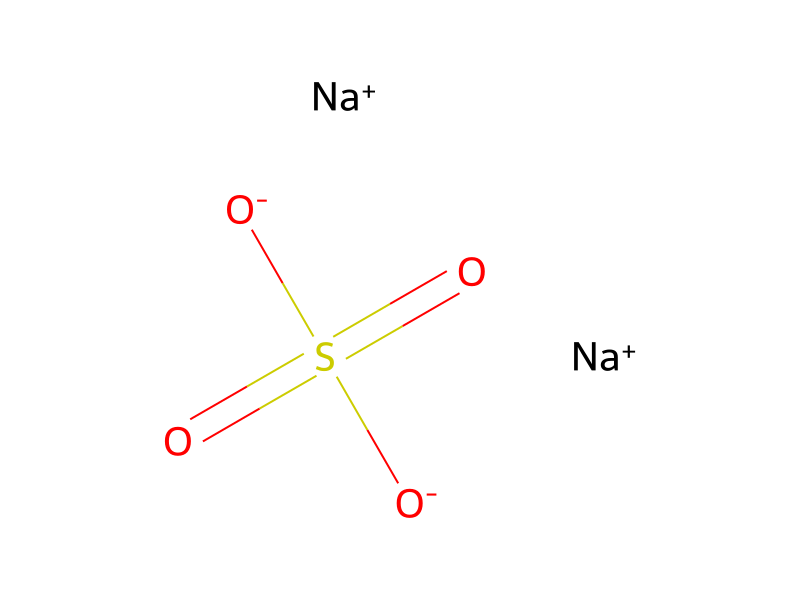
Sodium Sulfate → 1-[4-(2-Methyl-2-propanyl)phenyl]-2-propanamine
Reaction equation

[C:1]([C:5]1[CH:10]=[CH:9][C:8]([CH:11]=[C:12]([N+:14]([O-])=O)[CH3:13])=[CH:7][CH:6]=1)([CH3:4])([CH3:3])[CH3:2].[H-].[Al+3].[Li+].[H-].[H-].[H-].S([O-])([O-])(=O)=O.[Na+].[Na+]>O1CCCC1>[NH2:14][CH:12]([CH3:13])[CH2:11][C:8]1[CH:9]=[CH:10][C:5]([C:1]([CH3:4])([CH3:3])[CH3:2])=[CH:6][CH:7]=1Participants




Procedure
A solution of 1-(4-t-butylphenyl)-2-nitroprop-1-ene (2.19 g, 10 mmol) in tetrahydrofuran (50ml) was added, over a period of 20 minutes, to a solution of lithium aluminium hydride (1.14 g, 30 mmol) in tetrahydrofuran (50 ml). The reaction mixture was then heated under reflux for 20 hours, cooled and worked up with saturated aqueous sodium sulphate solution. The mixture was filtered through Hyflo (Trade mark; diatomaceous earth) and the pad washed well with ethyl acetate. Evaporation in vacuo followed by flash column chromatography upon silica gel using 85:10:5 - ethyl acetate: methanol: triethylamine as eluant afforded 1.42 g 2-amino-1-(4-t-butylphenyl)propane as a clear, colourless oil. Low resolution mass spectroscopy revealed the mass/charge ratio of the parent molecule ion, M+, to be 191 thereby confirming the molecular weight of the product to be 191.
Workup
- temperatureThe reaction mixture was then heated
- temperatureunder reflux for 20 hours
- temperaturecooled
- filtrationThe mixture was filtered through Hyflo (Trade mark; diatomaceous earth)
- washthe pad washed well with ethyl acetate
- customEvaporation in vacuo
Sources & evidence
- ORD record
- ord-9b4a0542ee484f0bb912ee4cf74b003e
- Source dataset
- uspto-grants-1994_07
- Patent number
- US05332745
Reaction notes
Loading…