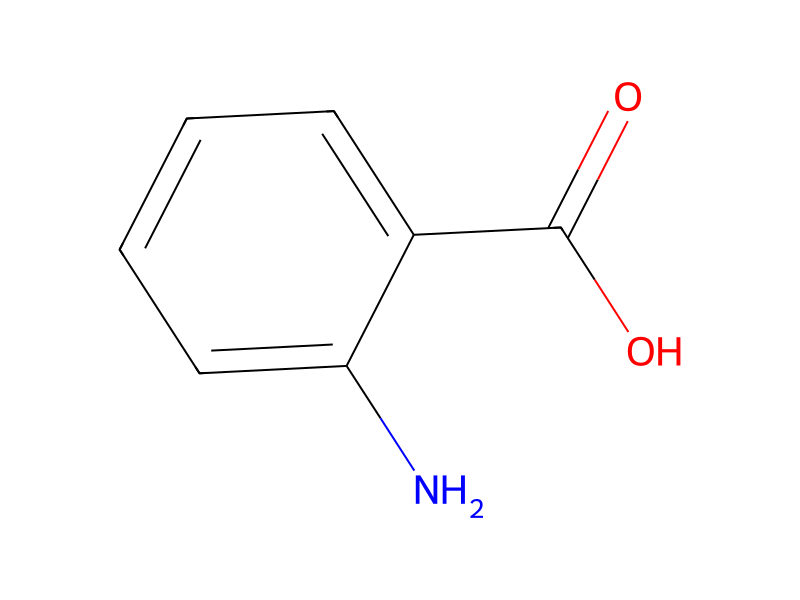
Anthranilic Acid → HCID 21501422, compound
Reaction equation

Br[C:2]1[C:11]2[C:6](=[CH:7][CH:8]=[CH:9][CH:10]=2)[CH:5]=[CH:4][C:3]=1[CH3:12].[C:13]([OH:22])(=[O:21])[C:14]1[C:15](=[CH:17][CH:18]=[CH:19][CH:20]=1)[NH2:16].C(=O)([O-])[O-].[K+].[K+]>[N+](C1C=CC=CC=1)([O-])=O.[Cu]>[CH3:12][C:3]1[CH:4]=[CH:5][C:6]2[C:11](=[CH:10][CH:9]=[CH:8][CH:7]=2)[C:2]=1[NH:16][C:15]1[C:14](=[CH:20][CH:19]=[CH:18][CH:17]=1)[C:13]([OH:22])=[O:21]Participants
6
Reactant 3


Product 1

Reagents, catalysts & solvents 2


Procedure
In Monatsh, 71, pages 122-127 (1937), W. Knap reports that when 1-bromo-2-methylnaphthalene and anthranilic acid were heated in the presence of copper powder and potassium carbonate in nitrobenzene (boiling at 210° C.) to the boiling point of nitrobenzene, N-(2-methyl-1-naphthyl)-anthranilic acid was obtained in the form of a grayish yellow crystal having a melting point of 215°-216° C.
Sources & evidence
- ORD record
- ord-264e40df49f2465ea3864b7efed06e2d
- Source dataset
- uspto-grants-1976_11
- Patent number
- US03989746
Reaction notes
Loading…