1-Butanol → Butanal
Reaction equation

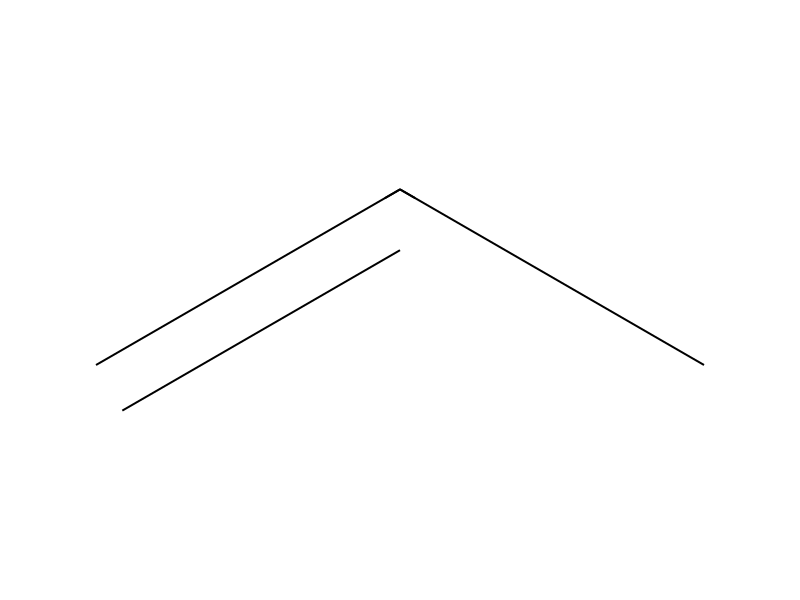
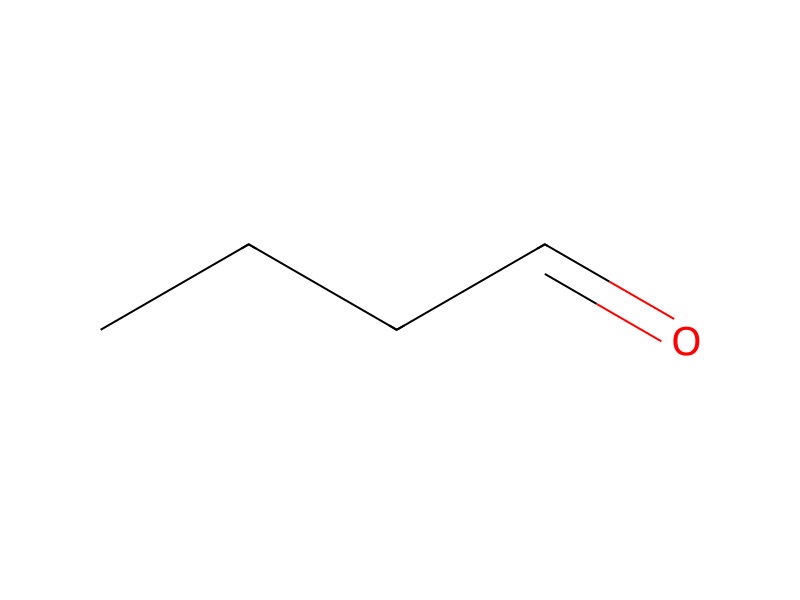
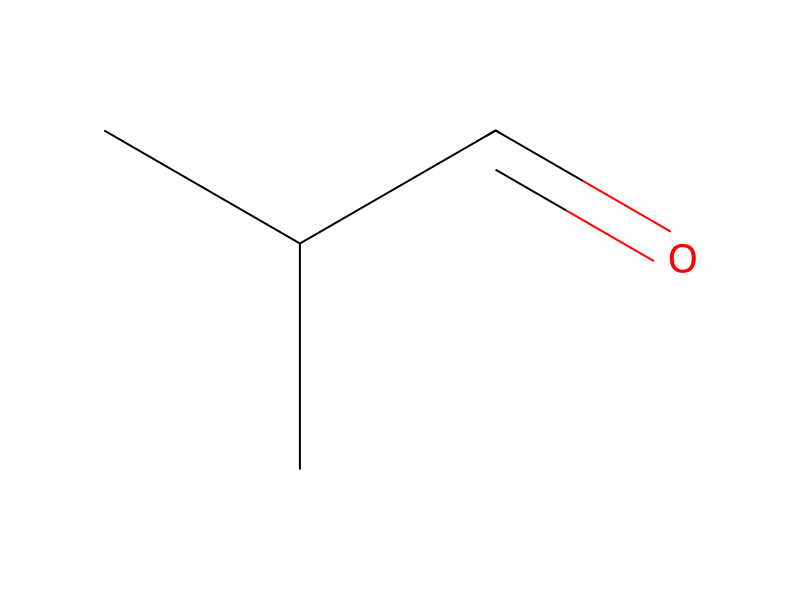
C=CC.[CH2:4]([OH:8])[CH:5]([CH3:7])[CH3:6].[CH2:9]([OH:13])[CH2:10][CH2:11][CH3:12]>[Co].[Pd]>[CH:4](=[O:8])[CH:5]([CH3:7])[CH3:6].[CH:9](=[O:13])[CH2:10][CH2:11][CH3:12]Participants
Reactant 3


Product 2
Reagents, catalysts & solvents 2


Conditions
- Temperature
- 10 °C
Procedure
In the first run, cobalt and palladium complexes were added in a large excess to saturate the supporting base with the cobalt catalyst species and the promoter. The cobalt and palladium supported on the base from the first run must be much less than the original amounts present in the liquid phase. It is quite simple to support these components quantitatively on the base by adding sufficient amount of the base to the soluble catalyst species. The second run was started by introducing 20 g. of propylene in 50 ml. o-xylene to the solid catalyst aged for 24 hours from the first run. The pressure of the reactor at this stage was 200 psig. and was raised to 800 psig. with a premixed gas (1:1 H2 /CO), and then to 1200 psig. with H2. The reactor was slowly heated to 100° C. from room temperature (10° C.) in a 2 1/2 hour period. The initial pressure drop was observed under 1660 psig. at 100° C. The pressure dropped from 1685 psig. to 1550 psig. (at the temperature range 100°-124° C.) within 3 1/2 hours. The reaction was allowed to proceed for an additional 2 hours at a little higher temperature range (124°-146° C.). The pressure of the reactor dropped to 800 psig. at this stage. A yellowish reaction mixture, indicating that no catalyst leaches away from the supporting base, was discharged from the reactor. Analysis of the two reaction mixtures discharged from the first and second runs showed that the product distributions are quite similar in both runs. In the first run, the propylene feed was reacted in 23% conversion to give 24.4% isobutanal, 60.2% n-butanal, 2.0% isobutanol, 8.9% n-butanol and 4.6% unidentified products; in the second run, the conversion of propylene was 21% and the product distribution was 14.6% isobutanal, 55.4% n-butanal, 3.7% isobutanol, 16.6% n-butanol, 0.2% 2-ethylhexanol and 10.4% unidentified products. It is obvious from these results that the cobalt carbonyl catalyst and palladium promoter are simultaneously supported on the same base and that the resulting supported solid catalyst exhibits an improved catalytic behavior. The co-supported solid catalyst (comprising cobalt and palladium) was capable of lowering the temperature required to initiate the hydroformylation of propylene by 40°-60° C. than the catalyst without the promoter (see Example V).
Workup
- concentrationto saturate the supporting base with the cobalt catalyst species
- additionby adding sufficient amount of the base to the soluble catalyst species
- additionby introducing 20 g
- temperatureand was raised to 800 psig
- customat 100° C
- additionThe pressure dropped from 1685 psig
- customat the temperature range 100°-124° C.
- customwithin 3 1/2 hours
- waitto proceed for an additional 2 hours at a little higher temperature range (124°-146° C.)
- additionThe pressure of the reactor dropped to 800 psig
- customA yellowish reaction mixture
- customAnalysis of the two reaction mixtures
Sources & evidence
- ORD record
- ord-d967002055934e89901bbfa72a5f9e17
- Source dataset
- uspto-grants-1976_11
- Patent number
- US03989759
Reaction notes
Loading…