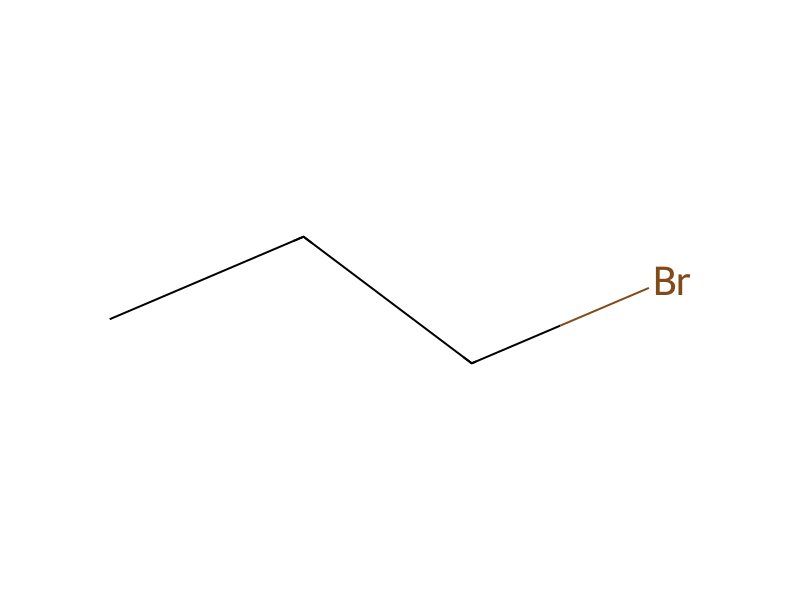
1-Bromopropane → 6-(Butylamino)-2-propyl[1,2,4]triazolo[4,3-b]pyridazin-3(2H)-one
Reaction equation

[CH2:1]([NH:5][C:6]1[CH:7]=[CH:8][C:9]2[N:10]([C:12](=[O:15])[NH:13][N:14]=2)[N:11]=1)[CH2:2][CH2:3][CH3:4].[CH2:16](Br)[CH2:17][CH3:18]>>[CH2:1]([NH:5][C:6]1[CH:7]=[CH:8][C:9]2[N:10]([C:12](=[O:15])[N:13]([CH2:16][CH2:17][CH3:18])[N:14]=2)[N:11]=1)[CH2:2][CH2:3][CH3:4]Participants
3


Procedure
By reacting the product of Example 3 with propyl bromide according to the procedure of Example 4, 6-n-butylamino-2-propyl-1,2,4-triazolo[4,3-b]pyridazin-3(2H)-one is obtained, yield 86%, m.p. 183°-185° (ethyl acetate with some drops of absolute ethanol). The hydrochloride is obtained by treatment with ethanolic HCl.
Sources & evidence
- ORD record
- ord-9051f45b06ad4561a92b33a4f602c869
- Source dataset
- uspto-grants-1976_11
- Patent number
- US03994898
Reaction notes
Loading…