Ethanol → 2-(3-Amino-5-ethyl-2-pyrazolin-1-yl)-6-chloropyridine
Reaction equation

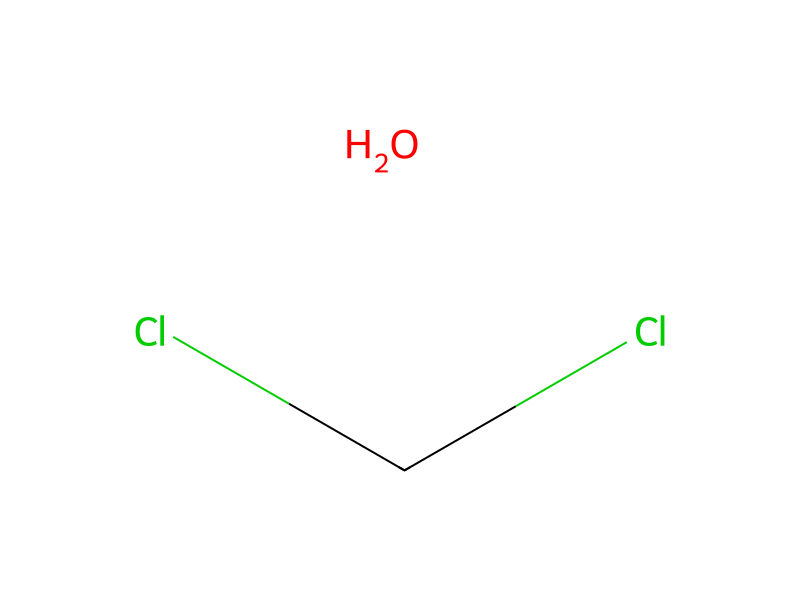
[Na].[CH2:2](O)[CH3:3].[NH2:5][C:6]1[CH2:10][CH2:9][N:8]([C:11]2[CH:16]=[CH:15][CH:14]=[C:13]([Cl:17])[N:12]=2)[N:7]=1.COC(CC)CC#N>O.ClCCl>[NH2:5][C:6]1[CH2:10][CH:9]([CH2:2][CH3:3])[N:8]([C:11]2[CH:16]=[CH:15][CH:14]=[C:13]([Cl:17])[N:12]=2)[N:7]=1Participants
6




Procedure
A 0.26 g. amount of sodium metal is dissolved in 100 ml. of absolute ethanol, then 8.1 g. of 2-chloro-6-hydrazinopyridine (Example 2) is added followed by 6.4 g. of 3-methoxyvaleronitrile. The reaction mixture is refluxed for 16 hours, then is evaporated in vacuo to give a solid. The solid is dissolved in water/dichloromethane. The organic layer is separated, dried over magnesium sulfate, filtered through anhydrous magnesium silicate and concentrated while adding hexane to yield 7.0 g. of pale yellow crystals. A 200 mg. amount of the crude product is recrystallized from dichloromethanehexane to give 171 mg. of the product of the Example, as pale yellow crystals, m.p. 131°-133° C.
Workup
- temperatureThe reaction mixture is refluxed for 16 hours
- customis evaporated in vacuo
- customto give a solid
- customThe organic layer is separated
- dry with materialdried over magnesium sulfate
- filtrationfiltered through anhydrous magnesium silicate
- concentrationconcentrated
- additionwhile adding hexane
- customto yield 7.0 g
- customamount of the crude product is recrystallized from dichloromethanehexane
- customto give 171 mg
Sources & evidence
- ORD record
- ord-c562b59629534f739b62fa0f41393bb3
- Source dataset
- uspto-grants-1986_11
- Patent number
- US04622401
Reaction notes
Loading…