Acetic Acid → 2-Chloro-4-methoxyaniline
Reaction equation

[Cl:1][C:2]1[CH:7]=[CH:6][CH:5]=[CH:4][C:3]=1[N+:8]([O-])=O.[C:11](O)(=[O:13])C>O>[Cl:1][C:2]1[CH:7]=[CH:6][CH:5]=[CH:4][C:3]=1[NH2:8].[Cl:1][C:2]1[CH:7]=[C:6]([O:13][CH3:11])[CH:5]=[CH:4][C:3]=1[NH2:8]Participants
5
Reactant 2

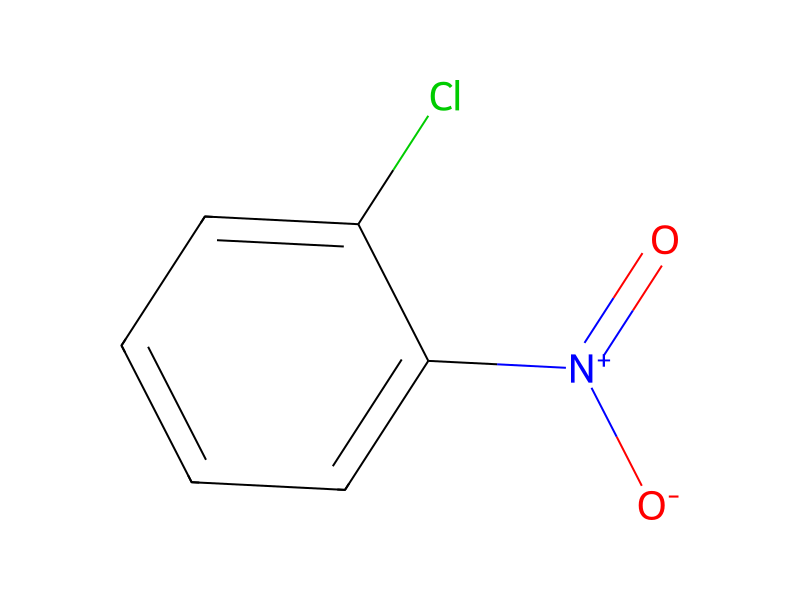
Product 2


Reagents, catalysts & solvents 1

Procedure
The same catalytic reduction reaction as in Example 1 was carried out except that 157.6 g (1.0 mole) of o-chloronitrobenzene was used instead of 137.1 g (1.0 mole) of o-nitrotoluene and a 50% aqueous solution of acetic acid was used instead of distilled water. The reaction required a period of 480 minutes with the absorption of 53.0 liters of hydrogen until its termination. Subsequently, the reaction solution was worked up in the same way as in Example 1 to give 8.5 g of o-chloroaniline as an initial distillate and 103.7 g (yield 65.5%) of 2-chloro-4-methoxyaniline (boiling point 141° to 143° C./20 mmHg) as a main distillate. The main distillate was found to have a purity of 99.5% by gas chromatography.
Workup
- customThe same catalytic reduction reaction as in Example 1
- customThe reaction
- customrequired a period of 480 minutes with the absorption of 53.0 liters of hydrogen until its termination
Sources & evidence
- ORD record
- ord-e64cbb4d38124f5cb9ceed46954b288e
- Source dataset
- uspto-grants-1986_11
- Patent number
- US04625062
Reaction notes
Loading…