Benzaldehyde → Acetate
Reaction equation

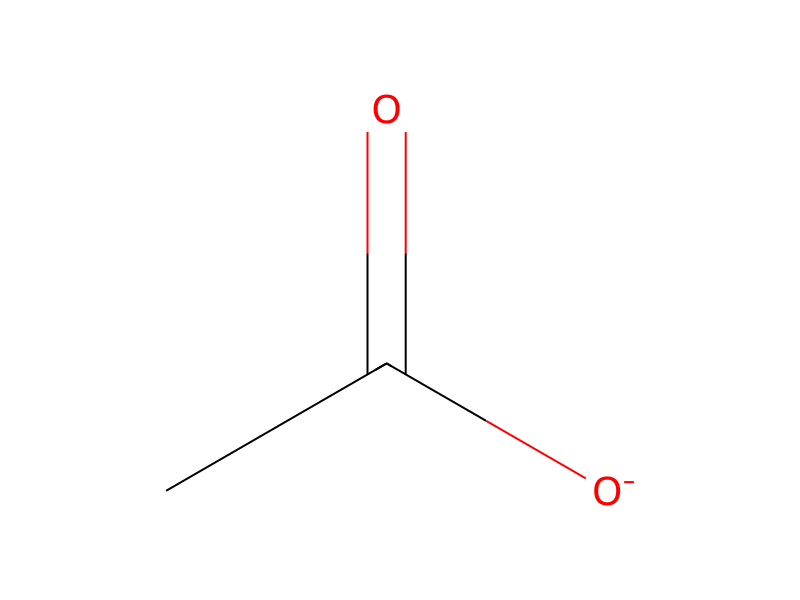
O=O.[C:3]([O:6][C:7](=[O:9])[CH3:8])(=[O:5])[CH3:4].[CH:10](=[O:17])C1C=CC=CC=1>CC1C=CC=CC=1>[C:3]([O-:6])(=[O:5])[CH3:4].[CH2:10]=[O:17].[C:3]([O:6][C:7](=[O:9])[CH3:8])(=[O:5])[CH3:4]Participants
7
Reactant 3



Product 3

Reagents, catalysts & solvents 1

Procedure
The oxidation of methyl benzenes with air or oxygen in the presence of acetic anhydride, benzaldehyde and an acid catalyst under mild reaction conditions yields a phenolic acetate and formaldehyde or paraformaldehyde when the ratio of acetic anhydride to methyl benzene is adjusted to provide the selective formation of the phenolic acetate and formaldehyde or paraformaldehyde. In this process, it is essential that the flow of air or oxygen through the reaction medium be maintained at a sufficient rate to provide for the continuous removal of formaldehyde as it is formed. The formaldehyde may then be recovered in the form of paraformaldehyde.
Sources & evidence
- ORD record
- ord-466af23f869d43c4bebb777f98ff0b2b
- Source dataset
- uspto-grants-1980_12
- Patent number
- US04237309
Reaction notes
Loading…