Acetone → HCID 20301869, compound
Reaction equation

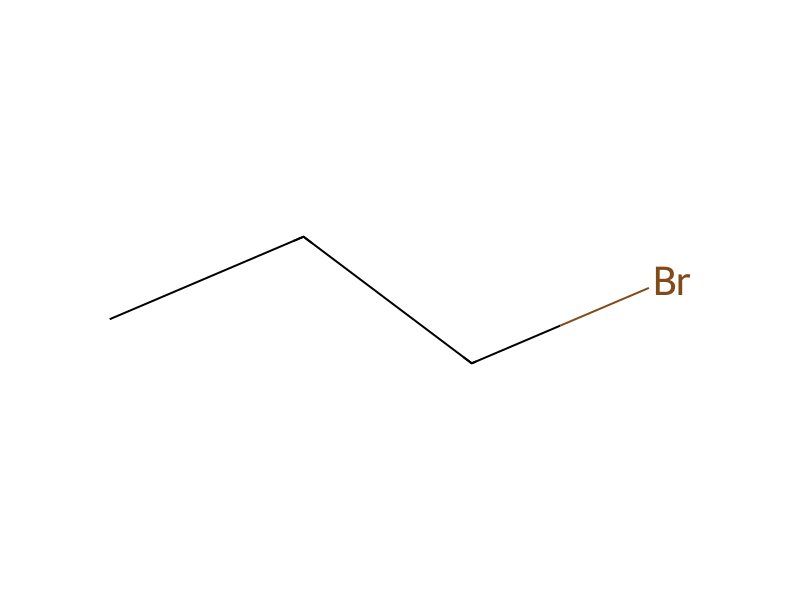
[N+:1]([C:4]1[CH:9]=[CH:8][C:7]([N+:10]([O-:12])=[O:11])=[CH:6][C:5]=1[OH:13])([O-:3])=[O:2].C(=O)([O-])[O-].[K+].[K+].[CH3:20][C:21]([CH3:23])=O.CCCBr>O>[CH2:20]([O:13][C:5]1[CH:6]=[C:7]([N+:10]([O-:12])=[O:11])[CH:8]=[CH:9][C:4]=1[N+:1]([O-:3])=[O:2])[CH2:21][CH3:23]Participants
Reactant 4



Product 1

Reagents, catalysts & solvents 1

Procedure
A mixture of 2,5-dinitrophenol (10 g), potassium carbonate (15 g) and acetone (100 ml) is stirred and n-propyl bromide (13.36 g) added to the mixture. The mixture is stirred at room temperature for 3 hours and then heated at reflux for 16 hours. More n-propyl bromide (6.68 g) is then added and refluxing continued for 96 hours. The mixture is filtered and the filtrate evaporated to dryness to afford a dark brown solid. This material is stirred with water (300 ml) and filtered. Recrystallization from methanol yields 8.9 g of 1-n-propoxy-2,5-dinitrobenzene, m.p. 52°-54° C. This compound (8.4 g) is reduced with hydrogen in a pressure vessel in the presence of methanol (250 ml) and 5% Pd/C catalyst (0.85 g); starting pressure: 3.36 kg/cm2, final pressure: 2.52 kg/cm2. The mixture is filtered and evaporated to dryness to afford 6.1 g of oily title compound, which is used in subsequent reactions without further purification.
Workup
- stirringThe mixture is stirred at room temperature for 3 hours
- temperatureheated
- temperatureat reflux for 16 hours
- temperaturerefluxing
- filtrationThe mixture is filtered
- customthe filtrate evaporated to dryness
- customto afford a dark brown solid
- filtrationfiltered
- customRecrystallization from methanol
Sources & evidence
- ORD record
- ord-373813ec0fc34f5da0ad2dc38cbe2c03
- Source dataset
- uspto-grants-1980_12
- Patent number
- US04239708
Reaction notes
Loading…