Potassium Carbonate → HCID 54200145, compound
Reaction equation

[NH:1]1[CH2:8][CH2:7][CH2:6][C@H:2]1[C:3]([OH:5])=[O:4].Br[CH:10]([C:14]([F:17])([F:16])[F:15])[C:11](Cl)=[O:12].[S:18]1C=C[CH:20]=[C:19]1CC(O)=O.C(=O)([O-])[O-].[K+].[K+].[OH-:33].[Na+]>O>[C:19]([S:18][CH:10]([C:14]([F:17])([F:16])[F:15])[C:11]([N:1]1[CH2:8][CH2:7][CH2:6][C@H:2]1[C:3]([OH:5])=[O:4])=[O:12])(=[O:33])[CH3:20]Participants



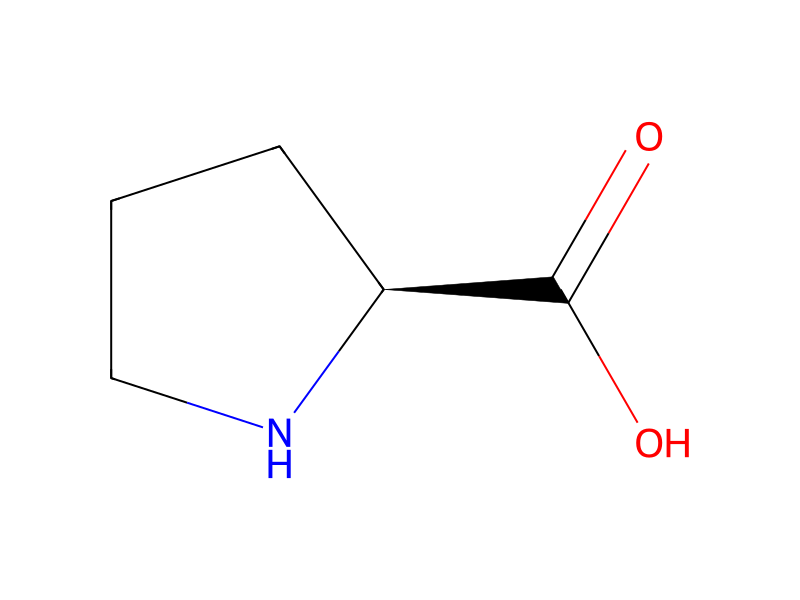



Procedure
To a solution of L-proline (5.75 g.) in 1 N sodium hydroxide (50 ml), chilled in an ice-water bath, 2-bromo-3,3,3-trifluoropropanoic acid chloride (12 g.) is added and the mixture is vigorously stirred at room temperature for three hours. A solution of thiolacetic acid (4 ml.) and potassium carbonate (4.8 g.) in water (50 ml.) is added and the mixture is stirred at room temperature for sixteen hours. After extraction with ethyl acetate, the aqueous layer is acidified with concentrated hydrochloric acid and extracted again with ethyl acetate. This last organic phase is dried over magnesium sulfate and concentrated to dryness in vacuo. The residue is chromatographed on a silica gel column with a mixture of benzeneacetic acid (7:2) to yield 1-(2-acetylthio-3,3,3-trifluoropropanoyl)-L-proline.
Workup
- stirringthe mixture is stirred at room temperature for sixteen hours
- extractionAfter extraction with ethyl acetate
- extractionextracted again with ethyl acetate
- dry with materialThis last organic phase is dried over magnesium sulfate
- concentrationconcentrated to dryness in vacuo
- customThe residue is chromatographed on a silica gel column with a mixture of benzeneacetic acid (7:2)
Sources & evidence
- ORD record
- ord-7a3de8e3b24c4fb1972ec58f1d6f808f
- Source dataset
- uspto-grants-1980_12
- Patent number
- US04241076
Reaction notes
Loading…