Triethylene Glycol → 2-(4-Chlorophenyl)butanoic acid
Reaction equation

[Cl:1][C:2]1[CH:14]=[CH:13][C:5]([C:6]([CH:8]([CH3:12])C(O)=O)=O)=[CH:4][CH:3]=1.[OH-:15].[K+].O.NN.[CH2:20]([OH:29])COCCOCCO>>[Cl:1][C:2]1[CH:3]=[CH:4][C:5]([CH:6]([CH2:8][CH3:12])[C:20]([OH:29])=[O:15])=[CH:13][CH:14]=1Participants
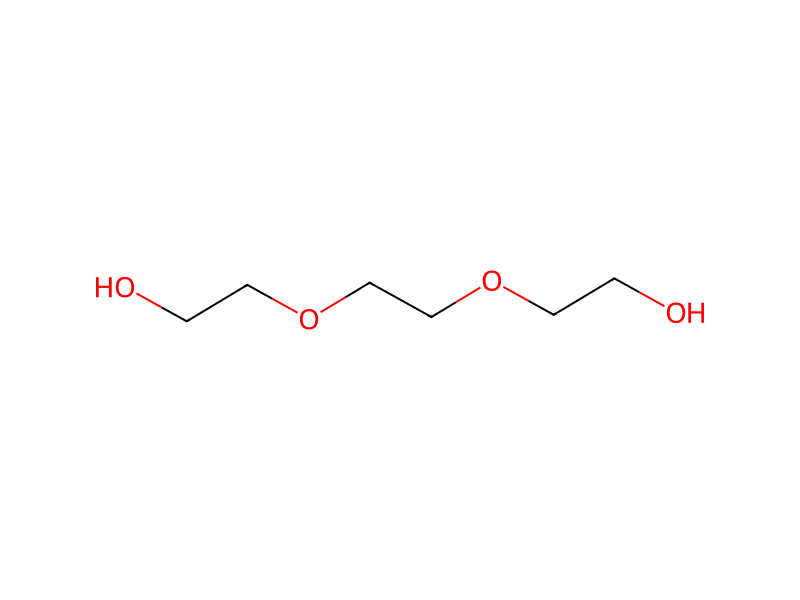




Conditions
- Temperature
- 142 °C
Procedure
4-Chlorobenzoyl propionic acid [Formula VII: R1 =R2 =R4 =H; R3 =Cl] (49.94 g, 234.9 mM) was dissolved under nitrogen in 320 mL of triethylene glycol. To the stirred room temperature solution was added potassium hydroxide (44.5 g, 794 mM) followed by 98% hydrazine hydrate (29.0 g, 580.0 mM). The mixture was heated to reflux temperature (142° C.) for 2 hours. Water and hydrazine hydrate were distilled off at atmospheric pressure; the pot temperature rose to 195°-200° C. After 0.5 hours at 195°-200° C., the mixture was cooled to ambient temperature and diluted with 320 mL of water. The aqueous solution was poured into hydrochloric acid (200 mL, 6N) and further diluted with 200 mL of ice water. Upon standing a solid formed which was filtered off, washed with water and vacuum dried (25° C., 15 Pa) to render 43.61 g (93%) of white solid.
Workup
- temperatureThe mixture was heated
- distillationWater and hydrazine hydrate were distilled off at atmospheric pressure
- customrose to 195°-200° C
- temperaturethe mixture was cooled to ambient temperature
- additiondiluted with 320 mL of water
- additionThe aqueous solution was poured into hydrochloric acid (200 mL, 6N)
- additionfurther diluted with 200 mL of ice water
- customformed which
- filtrationwas filtered off
- washwashed with water and vacuum
- customdried (25° C., 15 Pa)
Sources & evidence
- ORD record
- ord-271925c000844838a7521b655ac49211
- Source dataset
- uspto-grants-1996_07
- Patent number
- US05541319
Reaction notes
Loading…