Ammonium Hydroxide → 6,7-Dichloroanthracene-1,4,9,10-tetrol
Reaction equation

[Cl:1][C:2]1[CH:3]=[C:4]2[C:13](=[CH:14][C:15]=1[Cl:16])[C:12](=[O:17])[C:11]1[C:10]([OH:18])=[CH:9][CH:8]=[C:7]([OH:19])[C:6]=1[C:5]2=[O:20].[NH4+].[OH-].S(S([O-])=O)([O-])=O.[Na+].[Na+]>>[Cl:1][C:2]1[CH:3]=[C:4]2[C:13](=[CH:14][C:15]=1[Cl:16])[C:12]([OH:17])=[C:11]1[C:6]([C:7]([OH:19])=[CH:8][CH:9]=[C:10]1[OH:18])=[C:5]2[OH:20]Participants

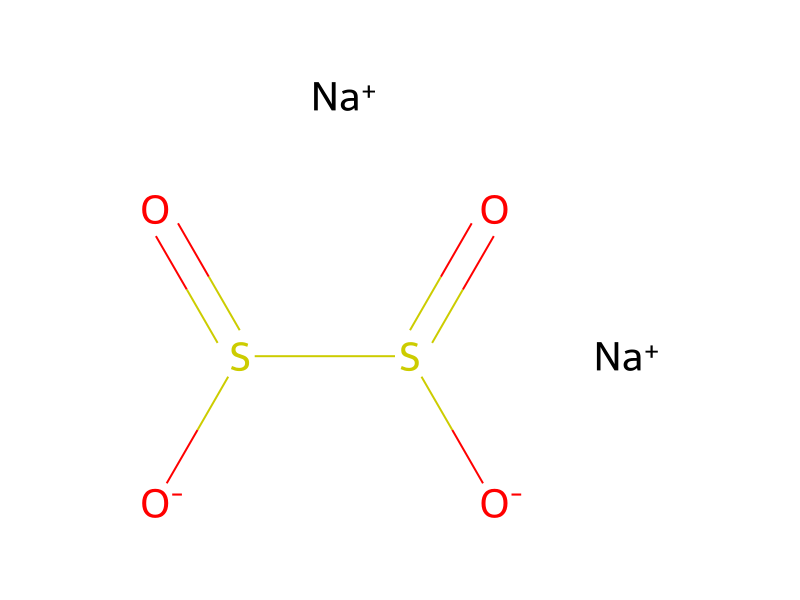


Conditions
- Temperature
- 55 °C
Procedure
Ten grams (32.35 mmol) of 6,7-dichloro- 1,4-dihydroxyanthraquinone were pulverized with enough NH4OH to make a paste. This was transferred to a 500 mL round bottom (RB) flask, using additional NH4OH to make the reaction mixture 0.13-0.16 M. While stirring, 6.72 grams (38.60 mmol) sodium hydrosulfite were added portionwise over 1.5 hours. Immediately after addition, the mixture was heated slowly to 55° C. on a steam bath, then heated at 55° C. for about 1.5 hours. After cooling to room temperature, the mixture was filtered, washed twice with water, and pulled dry on the funnel for a brief period. The product was dried overnight in a vacuum oven at 55-65° C. FDMS showed a mixture of starting material and product. This mixture was carried on to compound 2 of Table 1.
Workup
- additionImmediately after addition
- temperatureheated at 55° C. for about 1.5 hours
- temperatureAfter cooling to room temperature
- filtrationthe mixture was filtered
- washwashed twice with water
- custompulled dry on the funnel for a brief period
- customThe product was dried overnight in a vacuum oven at 55-65° C
- additiona mixture of starting material and product
Sources & evidence
- ORD record
- ord-e4d0ed785c5c44fb8b6af8c0dfd39d53
- Source dataset
- uspto-grants-1999_10
- Patent number
- US05962557
Reaction notes
Loading…