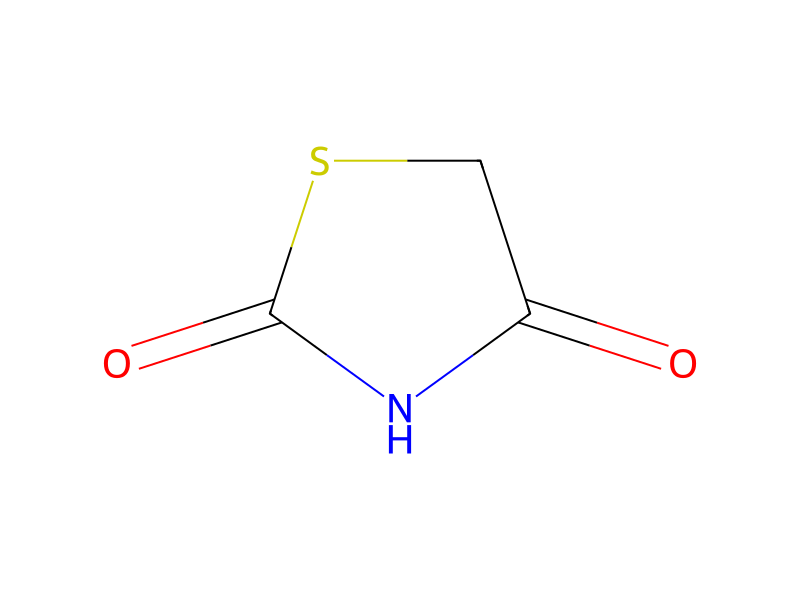
Thiazolidinedione → 5-[4-(4-Isopropoxyphenyl)butyl]-2,4-thiazolidinedione
Reaction equation

[CH:1]([O:4][C:5]1[CH:10]=[CH:9][C:8]([CH2:11][CH2:12][CH2:13][CH:14]2OCCO2)=[CH:7][CH:6]=1)([CH3:3])[CH3:2].[S:19]1[CH2:23][C:22](=[O:24])[NH:21][C:20]1=[O:25]>>[CH:1]([O:4][C:5]1[CH:6]=[CH:7][C:8]([CH2:11][CH2:12][CH2:13][CH2:14][CH:23]2[S:19][C:20](=[O:25])[NH:21][C:22]2=[O:24])=[CH:9][CH:10]=1)([CH3:2])[CH3:3]Participants
3


Procedure
According to the same manner as that described in Example 23, 2-[3-(4-isopropoxyphenyl)propyl]-1,3-dioxolane was condensed with 2,4-thiazolidinedione, and the resulting compound was subjected to catalytic hydrogenation to give crystals of 5-[4-(4-isopropoxyphenyl)butyl]-2,4-thiazolidinedione (yield: 68%). This product was recrystallized from ether-hexane. Colorless prisms, mp: 72-73° C.
Sources & evidence
- ORD record
- ord-30f192a5467b486f84c2fe2079947922
- Source dataset
- uspto-grants-1999_10
- Patent number
- US05965589
Reaction notes
Loading…