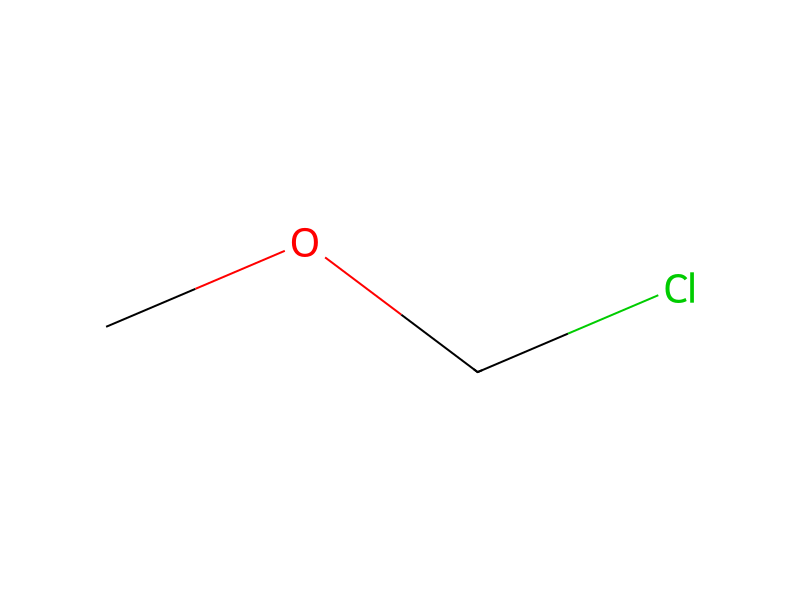
Chloromethyl Methyl Ether → HCID 10499431, Verbindung
Reaktionsgleichung

CC1(C)CCC(C)(C)C2C=C(O)C(C(O)=O)=CC1=2.[CH3:19][C:20]1([CH3:37])[CH2:29][CH2:28][C:27]([CH3:31])([CH3:30])[C:26]2[C:25]([Br:32])=[C:24]([OH:33])[C:23]([C:34]([OH:36])=[O:35])=[CH:22][C:21]1=2.CC(CC(C1C(O)=CC(O)=C(CC=C(C)C)C=1[O-])=O)C.[CH3:58][O:59][CH2:60]Cl>>[CH3:19][C:20]1([CH3:37])[CH2:29][CH2:28][C:27]([CH3:30])([CH3:31])[C:26]2[C:25]([Br:32])=[C:24]([O:33][CH2:58][O:59][CH3:60])[C:23]([C:34]([OH:36])=[O:35])=[CH:22][C:21]1=2Komponenten


Versuchsvorschrift
5,6,7,8-Tetrahydro-5,5,8,8-tetramethyl-2-hydroxynaphthalene (Compound H, available in accordance with the publication Krause Synthesis 1972 140), is the starting material in the example shown in Reaction Scheme 2. Compound H is brominated to provide the corresponding 3-bromo compound (Compound I) which is thereafter protected in the hydroxyl function by treatment with methoxymethyl chloride (MOMCl) to yield 5,6,7,8-tetrahydro-5,5,8,8-tetramethyl-3-methoxymethoxy-2-bromonaphthalene (Compound J). Compound J is reacted with t-butyllithium and carbon dioxide to provide the corresponding carboxylic acid (Compound K) from which the methoxymethyl protecting group is removed by acid to give 5,6,7,8-tetrahydro-5,5,8,8-tetramethyl-2-hydroxynaphthalene-3-carboxylic acid (Compound L). Compound L is brominated to yield 5,6,7,8-tetrahydro-5,5,8,8-tetramethyl-1-bromo-2-hydroxynaphthalene-3-carboxylic acid (Compound M). Compound L and Compound M serve as reagents in accordance with Formula 6. The hydroxy group of Compound X is protected for further transformations with methoxymethyl chloride (MOMCl) in the presence of base, yielding 5,6,7,8-tetrahydro-5,5,8,8-tetramethyl-1-bromo-2-methoxymethoxynaphthalene-3-carboxylic acid (Compound N). ##STR5##
Quellen und Nachweise
- ORD-Eintrag
- ord-f93ed25f04ee43a7bde2bc85d42c76b8
- Quelldatensatz
- uspto-grants-1999_10
- Patentnummer
- US05965606
Notizen zur Reaktion
Wird geladen…