Diethylenetriaminepentaacetic acid → N,N'-Dicyclohexylurea
Reaction equation

C(N(CC(O)=O)CCN(CC(O)=O)CC(O)=O)CN(CC(O)=O)CC(O)=[O:6].[CH:28]1([N:34]=[C:35]=[N:36][CH:37]2[CH2:42][CH2:41][CH2:40][CH2:39][CH2:38]2)[CH2:33][CH2:32][CH2:31][CH2:30][CH2:29]1>CS(C)=O>[CH:37]1([NH:36][C:35]([NH:34][CH:28]2[CH2:29][CH2:30][CH2:31][CH2:32][CH2:33]2)=[O:6])[CH2:42][CH2:41][CH2:40][CH2:39][CH2:38]1Participants
Reactant 2
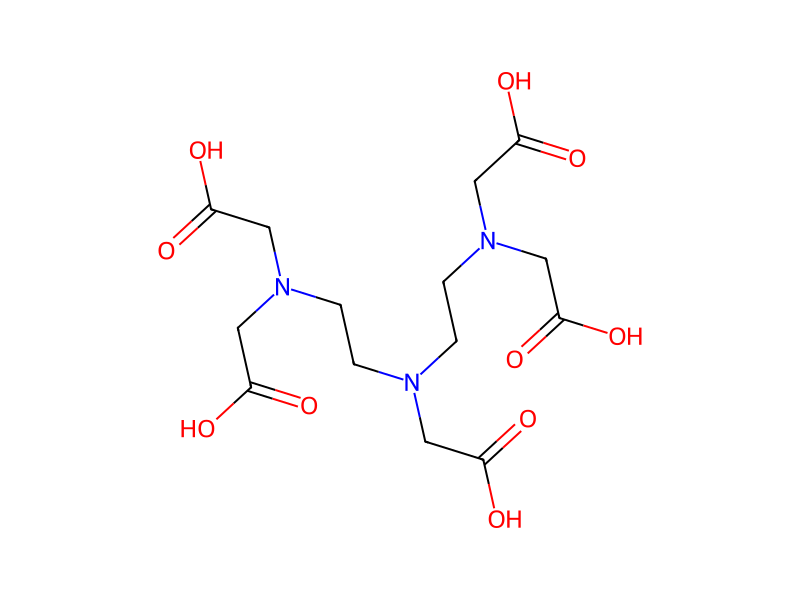

Product 1

Reagents, catalysts & solvents 1

Procedure
To a suspension of 1.0 g (2.5 mmol) diethylenetriamine pentaacetic acid in 50 ml dimethyl sulfoxide (DMSO) was added 1.28 g (6.25 mmol) dicyclohexyl carbodiimide (DCC) and this was stirred for 24 hr at room temperature. During this time the granular solid of DTPA was consumed and the white fluffy solid of dicyclohexyl urea formed. The reaction mixture was filtered and washed with DMSO. The filtrate was split into two equal volumes. The first fraction was concentrated to a thick oil under reduced pressure and heat. A solid precipitated from the oil upon the addition of 30 ml acetonitrile. The solid was collected by filtration, washed with cold acetonitrile and dried under vacuum to give 0.32 g (68%) of a brown solid mp 110°-130° C. NMR analysis revealed an average of one anhydride/DTPA.
Workup
- customDuring this time the granular solid of DTPA was consumed
Sources & evidence
- ORD record
- ord-eea193a0ac37412c917d0ac4df0e89c7
- Source dataset
- uspto-grants-1994_08
- Patent number
- US05334729
Reaction notes
Loading…