3-Furoic acid → 3,4-Dihydro-2H-pyran-5-carboxylic acid
Reaction equation

[O:1]1[CH2:5][CH2:4][CH:3]([C:6]([OH:8])=[O:7])[CH2:2]1.O1C=CC(C(O)=O)=[CH:10]1.S1CCC(C(O)=O)C1.BrCC(C(OC)=O)CCBr.[S-2].[Na+].[Na+]>[Ni]>[O:1]1[CH:2]=[C:3]([C:6]([OH:8])=[O:7])[CH2:10][CH2:4][CH2:5]1Participants
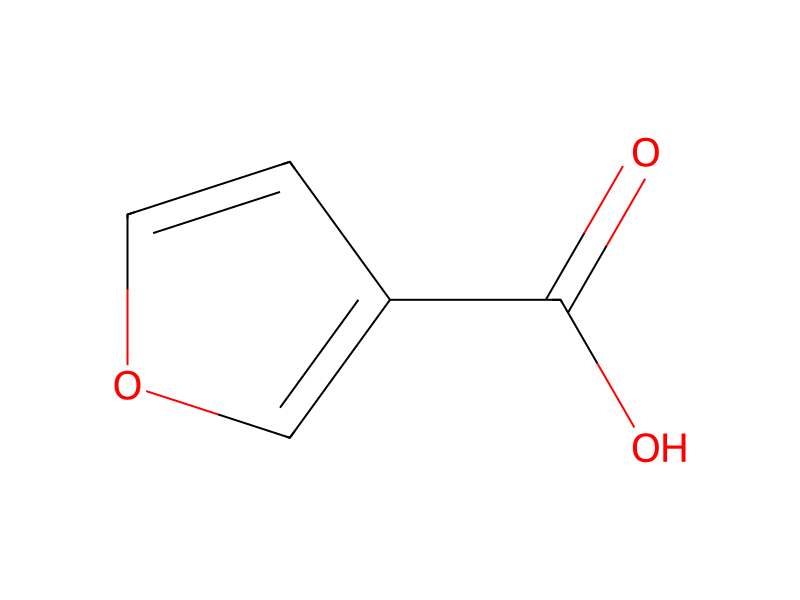

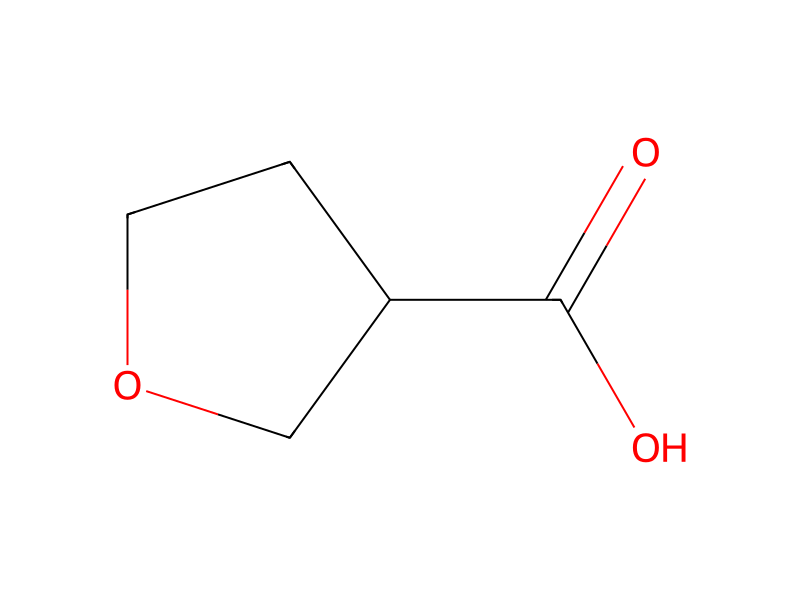



Procedure
Tetrahydrofuran-3-carboxylic acid (formula I: n=1, X=S) can be prepared by hydrogenation of furan-3-carboxylic acid with Raney Nickel (Boekelheide and Morrison, J. Am. Chem. Soc. 80 (1958) 3905), tetrahydrothiophene-3-carboxylic acid (formula I: n=1, X=S) is accessible by reaction of methyl 1,4-dibromobutane-2-carboxylate with sodium sulfide and subsequent alkaline hydrolysis of the ester group (Kapovits and Kucsman, Acta Chim. Acad. Sci. Hung. 34 (1962) 79), (2H)-tetrahydropyran-3-carboxylic acid (formula I: n=2, X=S) can be obtained by hydrogenation of 2,3-dihydro-(4H)-pyran-5-carboxylic acid with Raney Nickel (Silberman, J. Org. Chem. 25 (1960) 151), (2H)-tetrahydrothiopyran-3-carboxylic acid (formula I: n=2, X=S) can be prepared, for example, from ethyl 1,5-dibromopentane-2-carboxylate by ring closure with sodium sulfide and subsequent alkaline hydrolysis (Kapovits and Kucsman, Acta Chim. Acad. Sci. Hung. 34 (1962) 79).
Sources & evidence
- ORD record
- ord-6d6296be298f42e1a23e6e9d373ed813
- Source dataset
- uspto-grants-1994_08
- Patent number
- US05334730
Reaction notes
Loading…