Acetonitrile → 3,5-Dichloro-1-fluoropyridinium triflate
Reaction equation

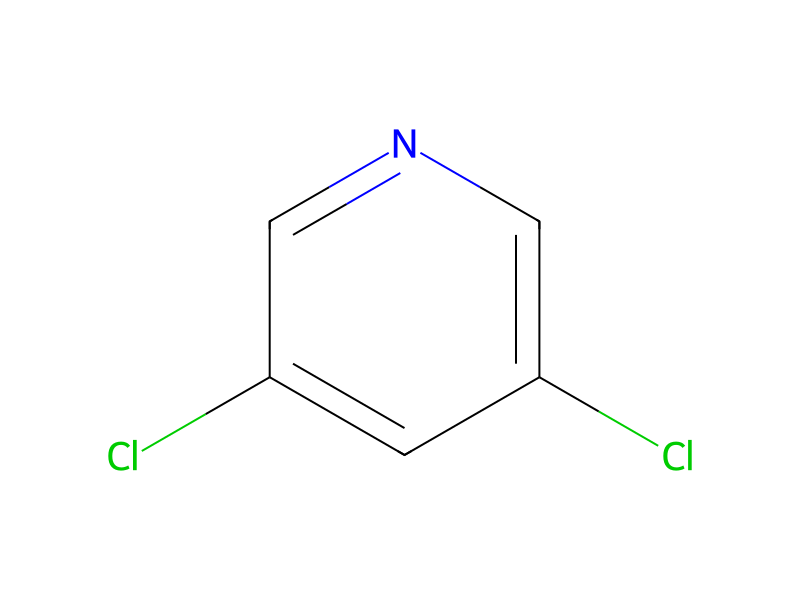
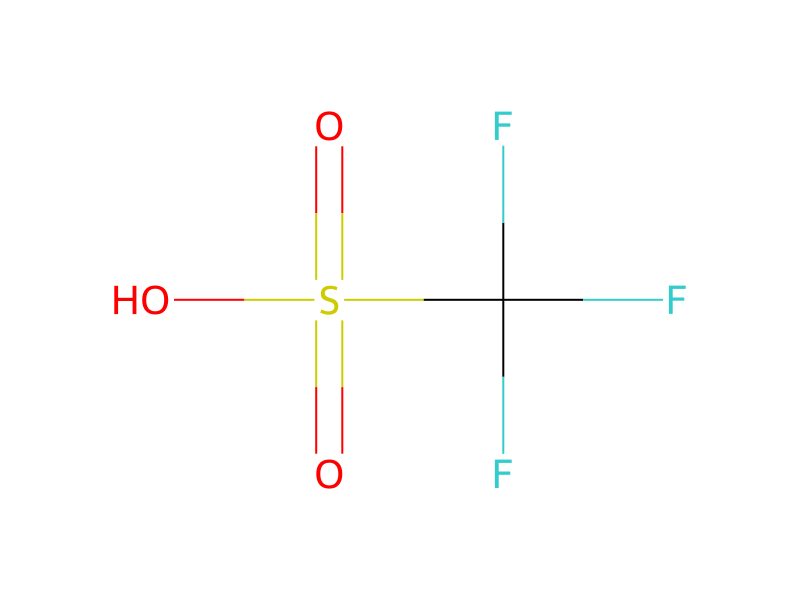
C(#N)C.[Cl:4][C:5]1[CH:6]=[N:7][CH:8]=[C:9]([Cl:11])[CH:10]=1.[F:12][C:13]([F:19])([F:18])[S:14]([OH:17])(=[O:16])=[O:15]>N1C=CC=CC=1>[F:12][C:13]([F:19])([F:18])[S:14]([O-:17])(=[O:16])=[O:15].[F:12][N+:7]1[CH:8]=[C:9]([Cl:11])[CH:10]=[C:5]([Cl:4])[CH:6]=1Participants
5
Reactant 3

Product 1

Reagents, catalysts & solvents 1

Conditions
- Temperature
- -20 °C
Procedure
To 40 ml of acetonitrile were added 3.087 g (20.860 mmol ) of 3,5-dichloropyridine and 3.039 g (20.250 mmol ) of trifluoromethanesulfonic acid (i.e., the amount pyridine compound was 1.03 times that of trifluoromethanesulfonic acid in a molar ratio), and the mixture was cooled to -20° C. The following procedures were conducted as in Example 1, and 5.774 g (18.3 mmol) of N-fluoro-3, 5-dichloropyridinium trifluoromethanesulfonate were obtained with a yield of 90.0%.
Sources & evidence
- ORD record
- ord-d4633577643a4208826e935ea0c9635c
- Source dataset
- uspto-grants-1994_08
- Patent number
- US05336772
Reaction notes
Loading…