4-Chloro-3,5-dinitrobenzotrifluoride → 5-(Trifluoromethyl)benzene-1,3-diamine
Reaction equation

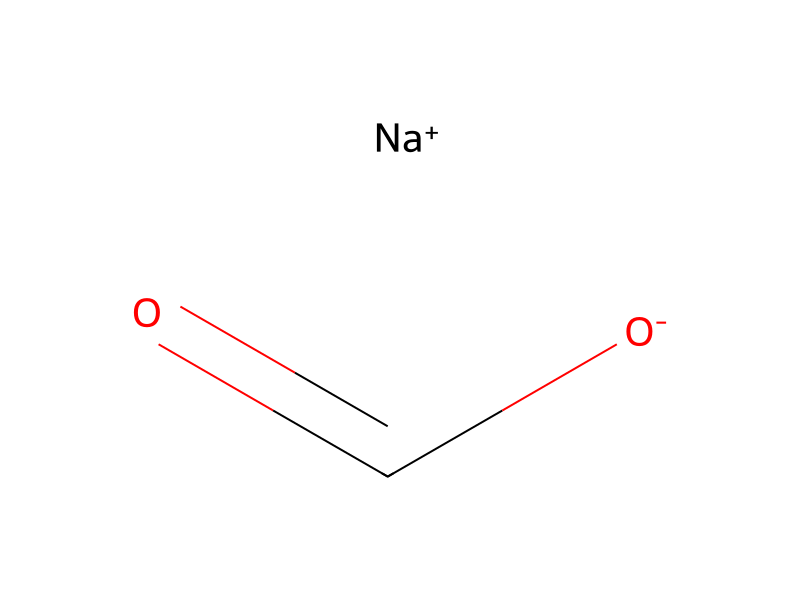
C([O-])=O.[Na+].Cl[C:6]1[C:11]([N+:12]([O-])=O)=[CH:10][C:9]([C:15]([F:18])([F:17])[F:16])=[CH:8][C:7]=1[N+:19]([O-])=O.C([O-])(=O)C.[Na+].NC1C(N)=C(C(F)(F)F)C=CC=1>C(O)(=O)C.[Pd]>[NH2:19][C:7]1[CH:8]=[C:9]([C:15]([F:16])([F:17])[F:18])[CH:10]=[C:11]([NH2:12])[CH:6]=1Participants





Conditions
- Temperature
- 40 °C
Procedure
Sodium formate (12.24 g) was added to a mixture of 4-chloro-3,5-dinitrobenzotrifluoride (5.41 g), sodium acetate (1.64 g) and 5% Pd/C (0.5 g) in glacial acetic acid (60 mL). The mixture was stirred and the resultant exotherm, which lasted about an hour, was controlled by cooling to maintain a reaction temperature of about 40° C. As the exotherm subsided, external heating was applied to maintain the temperature at about 40° C. Gas chromatographic analysis of the reaction mixture, at the end of one hour, indicated diaminobenzotrifluoride as the major component (35%) with no 4-chloro-3,5-dinitrobenzotrifluoride remaining. The maximum amount (about 45%) of 3,5-diaminobenzotrifluoride formed after 2 hours after which it was converted to other undesirable products.
Workup
- waitthe resultant exotherm, which lasted about an hour
- temperatureby cooling
- temperatureexternal heating
- temperatureto maintain the temperature at about 40° C
- customat the end of one hour
Sources & evidence
- ORD record
- ord-185781839bed40fca10d6de331075990
- Source dataset
- uspto-grants-1994_08
- Patent number
- US05336808
Reaction notes
Loading…