4-Toluenesulfonyl chloride → 1-Tosyl-3-pyrrolidinol Tosylate
Reaction equation

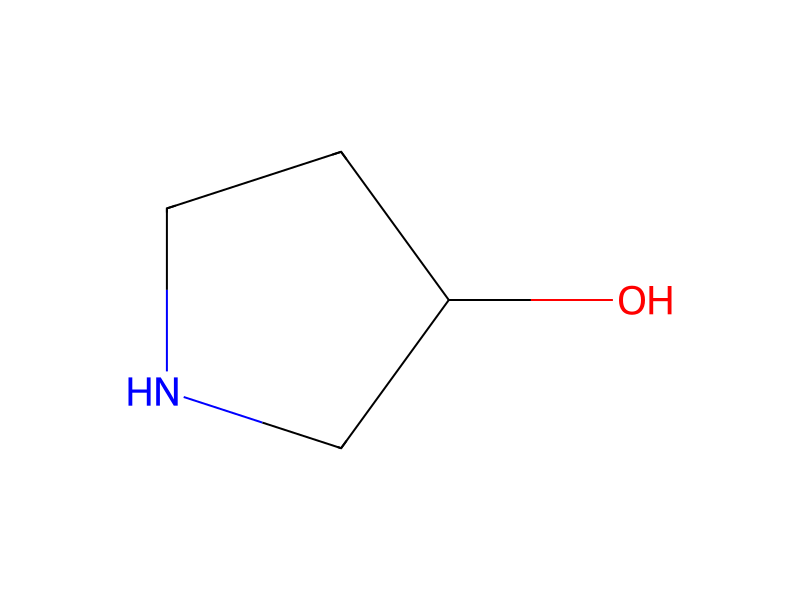
[C:1]1([CH3:11])[CH:6]=[CH:5][C:4]([S:7](Cl)(=[O:9])=[O:8])=[CH:3][CH:2]=1.[OH:12][CH:13]1[CH2:17][CH2:16][NH:15][CH2:14]1>N1C=CC=CC=1>[S:7]([N:15]1[CH2:16][CH2:17][CH:13]([O:12][S:7]([C:4]2[CH:5]=[CH:6][C:1]([CH3:11])=[CH:2][CH:3]=2)(=[O:9])=[O:8])[CH2:14]1)([C:4]1[CH:5]=[CH:6][C:1]([CH3:11])=[CH:2][CH:3]=1)(=[O:9])=[O:8]Participants
Reactant 2

Product 1

Reagents, catalysts & solvents 1

Procedure
Para-toluenesulphonyl chloride (68.8 g) was added, in portions, to a solution of 3-(R,S)-hydroxypyrrolidine (15 g) in dry pyridine (200 ml) at 0° C. The mixture was allowed to warm to room temperature and stirred for 16 hours. The solution was concentrated in vacuo to approximately half the original volume then partitioned between dichloromethane (500 ml) and water (300 ml). The layers were separated and the aqueous layer was extracted with dichloromethane (3×100 ml). The combined dichloromethane extracts were washed with 2M hydrochloric acid (100 ml) and 10% aqueous sodium hydroxide (100 ml) then dried (MgSO4) and concentrated in vacuo to give an oil which was crystallised from dichloromethane/ether to give the title compound as a microcrystalline powder, yield 28.3 g, m.p. 119°-121° C.
Workup
- concentrationThe solution was concentrated in vacuo to approximately half the original volume
- customthen partitioned between dichloromethane (500 ml) and water (300 ml)
- customThe layers were separated
- extractionthe aqueous layer was extracted with dichloromethane (3×100 ml)
- washThe combined dichloromethane extracts were washed with 2M hydrochloric acid (100 ml) and 10% aqueous sodium hydroxide (100 ml)
- dry with materialthen dried (MgSO4)
- concentrationconcentrated in vacuo
- customto give an oil which
- customwas crystallised from dichloromethane/ether
Sources & evidence
- ORD record
- ord-be33791ca2f545c6ba2379366e86d700
- Source dataset
- uspto-grants-1994_08
- Patent number
- US05340831
Reaction notes
Loading…