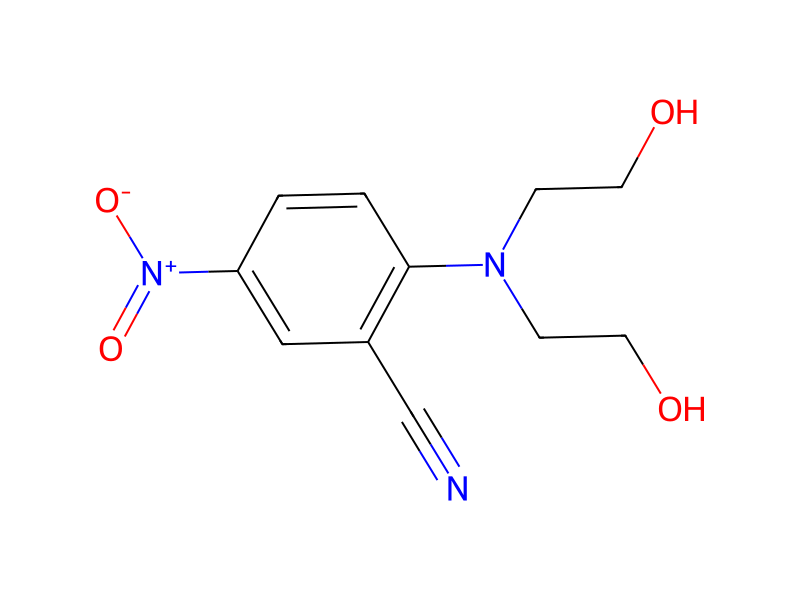
Diethanolamine → 2-Bis(2-hydroxyethyl)amino-5-nitrobenzonitrile
Reaction equation

Cl[C:2]1[CH:9]=[CH:8][C:7]([N+:10]([O-:12])=[O:11])=[CH:6][C:3]=1[C:4]#[N:5].[NH:13]([CH2:17][CH2:18][OH:19])[CH2:14][CH2:15][OH:16]>[N+]([O-])([O-])=O.[Ag+]>[OH:16][CH2:15][CH2:14][N:13]([CH2:17][CH2:18][OH:19])[C:2]1[CH:9]=[CH:8][C:7]([N+:10]([O-:12])=[O:11])=[CH:6][C:3]=1[C:4]#[N:5]Participants
4
Reactant 2
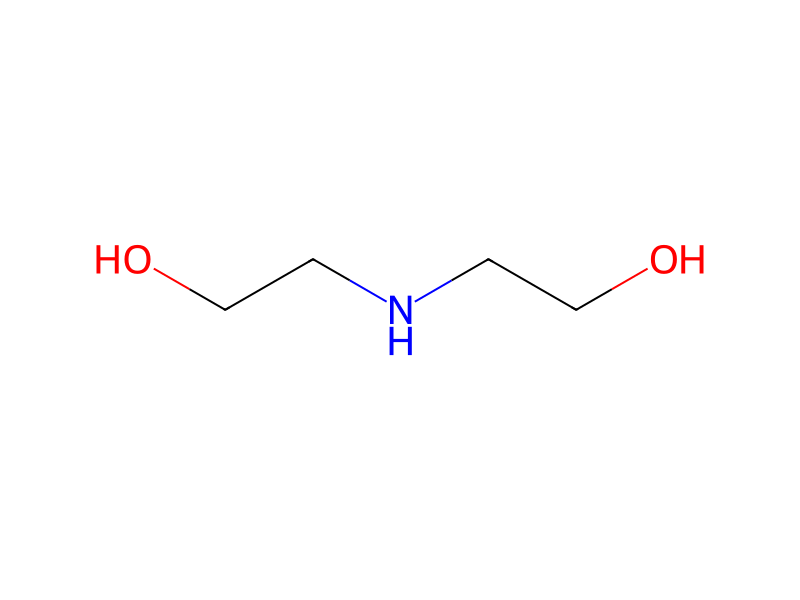

Product 1
Reagents, catalysts & solvents 1

Conditions
- Temperature
- 100 °C
Procedure
2-Chloro-5-nitrobenzonitrile (25.5 g) and silver nitrate (28.5 g) were added to diethanolamine (102 g) and the mixture was stirred at 100° C. for 1 h. The reaction mixture was cooled to room temperature and the solid was filtered off. To the filtrate was added water and the mixture was extracted with ethyl acetate. The organic layer was washed with saturated brine and dried over anhydrous sodium sulfate, after which the solvent was evaporated under reduced pressure. Diisopropyl ether was added to the residue to allow crystallization. The crystals were recrystallized from hydrous methanol to give 2-bis(2-hydroxyethyl)amino-5-nitrobenzonitrile (21.2 g).
Workup
- temperatureThe reaction mixture was cooled to room temperature
- filtrationthe solid was filtered off
- additionTo the filtrate was added water
- extractionthe mixture was extracted with ethyl acetate
- washThe organic layer was washed with saturated brine
- dry with materialdried over anhydrous sodium sulfate
- customafter which the solvent was evaporated under reduced pressure
- additionDiisopropyl ether was added to the residue
- customcrystallization
- customThe crystals were recrystallized from hydrous methanol
Sources & evidence
- ORD record
- ord-150f4cab4bcf4205af37c08d687579e8
- Source dataset
- uspto-grants-2006_03
- Patent number
- US07015218B1
Reaction notes
Loading…