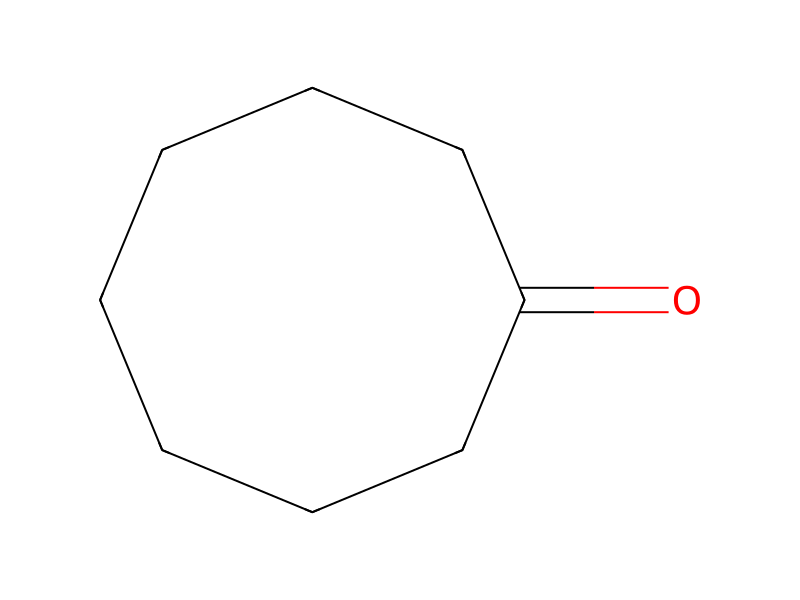
Acetic Acid → Cyclooctanone
Reaction equation

[CH2:1]1[CH2:8][CH2:7][CH2:6][CH2:5][CH2:4][CH2:3][CH2:2]1.[OH:9]N1[C:20](=[O:21])[C:19]2[C:14](=[CH:15][CH:16]=[CH:17][CH:18]=2)S1(=O)=O.[C:22]([OH:25])(=O)[CH3:23]>>[C:1]1(=[O:9])[CH2:8][CH2:7][CH2:6][CH2:5][CH2:4][CH2:3][CH2:2]1.[CH:20]1([OH:21])[CH2:19][CH2:14][CH2:15][CH2:16][CH2:17][CH2:18][CH2:22]1.[C:22]1(=[O:25])[CH2:23][CH2:6][CH2:5][CH2:4][C:3](=[O:9])[CH2:2][CH2:1]1Participants
6





Procedure
To 7.5 ml of acetic acid were added 336 mg (3.0 mmol) of cyclooctane, 60 mg (0.3 mmol) of N-hydroxysaccharin and 3.9 mg (0.015 mmol) of acetylacetonatocobalt Co(acac)2. The resultant mixture was stirred under an oxygen atmosphere at a temperature of 100° C. for 6 hours. The products in the reaction mixture were analysed by gas chromatography, with cyclooctane being transformed, with a conversion of 88%, into cyclooctanone (selectivity 42%, yield 37%), cyclooctanol (selectivity 3%, yield 2.5%), 1,4-cyclooctanedione (selectivity 11.5%, yield 10%) and octanediacid (selectivity 18%, yield 16%).
Sources & evidence
- ORD record
- ord-addb1f619662412bbdf8ef7937111e84
- Source dataset
- uspto-grants-2006_03
- Patent number
- US07019175B2
Reaction notes
Loading…