Acetic Acid → Terephthalic Acid
Reaction equation

CC1C=CC(C)=CC=1.C[C:10]1[C:15]2C[O:17][C:18](=[O:19])[C:14]=2[C:13](O[C@@H]2O[C@H](C(O)=O)[C@@H](O)[C@H](O)[C@H]2O)=[C:12](C/C=C(/CCC(O)=O)\C)[C:11]=1OC.Br.[C:45]([OH:48])(=[O:47])C>C([O-])(=O)C.[Co+2].C([O-])(=O)C.C([O-])(=O)C.[Mn+2].C([O-])(=O)C>[C:45]([OH:48])(=[O:47])[C:11]1[CH:10]=[CH:15][C:14]([C:18]([OH:17])=[O:19])=[CH:13][CH:12]=1Participants
7
Reactant 4




Product 1

Reagents, catalysts & solvents 2

Procedure
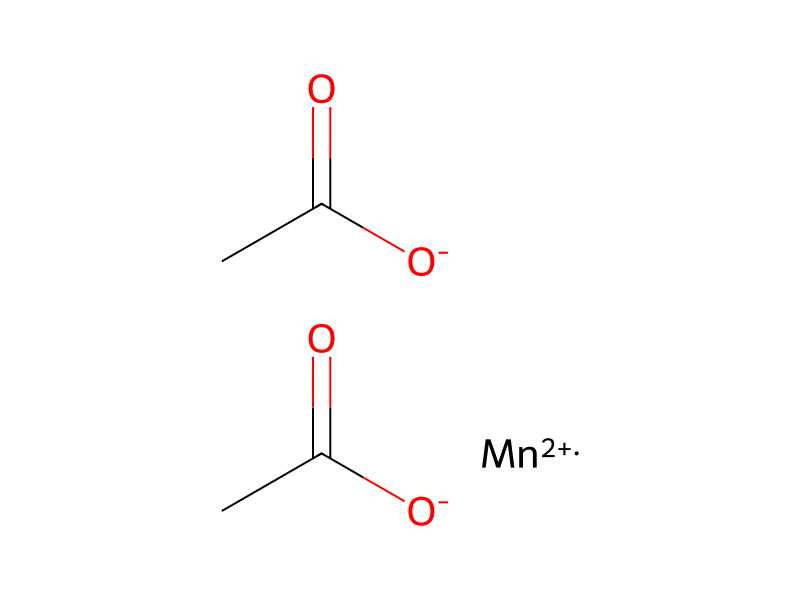
An example of the liquid-phase oxidation reaction is as follows. For example, using an apparatus with a commercial scale, p-xylene is subjected to liquid-phase oxidation by air (reaction temperature: 200 [° C.]; reaction pressure: 1.5 [MPaG]) in the presence of cobalt acetate, manganese acetate and hydrobromic acid in hydrous acetic acid to obtain a crude terephthalic acid slurry (the concentration of terephthalic acid: 34% by weight; the concentration of water in the hydrous acetic acid that is a dispersing medium: 11% by weight), and the resulting slurry is then introduced into crystallization vessels connected in series to subject the slurry to sequential pressure drop.
Sources & evidence
- ORD record
- ord-fe7bfc5d424a4c548b99b5941b2318aa
- Source dataset
- uspto-grants-2015_10
- Patent number
- US09150487B2
Reaction notes
Loading…