4,4,5,5-Tetramethyl[1,3,2]dioxaborolane → HCID 90412712, compound
Reaction equation

[C:1]([Si:5]([O:18][C@@H:19]1[C@H:26]2[C@H:22]([O:23][C:24]([CH3:28])([CH3:27])[O:25]2)[C:21]([CH2:29][O:30][C:31]([C:44]2[CH:49]=[CH:48][CH:47]=[CH:46][CH:45]=2)([C:38]2[CH:43]=[CH:42][CH:41]=[CH:40][CH:39]=2)[C:32]2[CH:37]=[CH:36][CH:35]=[CH:34][CH:33]=2)=[C:20]1I)([C:12]1[CH:17]=[CH:16][CH:15]=[CH:14][CH:13]=1)[C:6]1[CH:11]=[CH:10][CH:9]=[CH:8][CH:7]=1)([CH3:4])([CH3:3])[CH3:2].[CH3:51][C:52]1([CH3:59])[C:56]([CH3:58])([CH3:57])[O:55][BH:54][O:53]1>C1COCC1>[CH3:28][C:24]1([CH3:27])[O:25][C@H:26]2[C@@H:19]([O:18][Si:5]([C:1]([CH3:2])([CH3:4])[CH3:3])([C:12]3[CH:17]=[CH:16][CH:15]=[CH:14][CH:13]=3)[C:6]3[CH:7]=[CH:8][CH:9]=[CH:10][CH:11]=3)[C:20]([B:54]3[O:55][C:56]([CH3:58])([CH3:57])[C:52]([CH3:59])([CH3:51])[O:53]3)=[C:21]([CH2:29][O:30][C:31]([C:32]3[CH:33]=[CH:34][CH:35]=[CH:36][CH:37]=3)([C:38]3[CH:43]=[CH:42][CH:41]=[CH:40][CH:39]=3)[C:44]3[CH:49]=[CH:48][CH:47]=[CH:46][CH:45]=3)[C@H:22]2[O:23]1Participants
Reactant 2
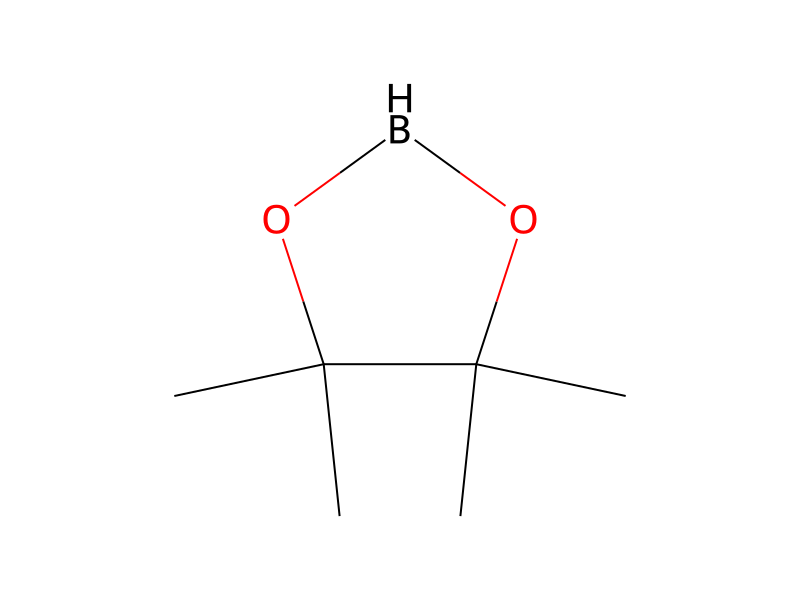

Product 1

Reagents, catalysts & solvents 1

Conditions
- Temperature
- 0 °C
Procedure
To a 25 mL round-bottom 3-neck flask equipped with nitrogen inlet/outlet, stir bar, and thermocouple with temperature controller was charged 0.2806 g of compound 8 (0.353 mmol, 1.0 eq) and 3 mL tetrahydrofuran (10 V). The reaction was cooled to 0° C. To this solution was added 0.653 mL (0.847 mmol, 2.4 eq) of isopropylmagnesium chloride lithium chloride complex, 1.3 M in THF slowly over 15 minutes. The reaction was stirred at 0° C. for 1 hour. HPLC assay indicated formation of intermediate. 0.128 mL of 4,4,5,5 tetramethyl-1,3,2 dioxaborolane (0.884 mmol, 2.5 eq) was added to the reaction. An HPLC assay after 1 hour at 0° C. indicated that the reaction was completed. The reaction was quenched with saturated aqueous ammonium chloride solution (3V). The ice bath was removed and the reaction warmed to room temperature. The reaction was charged with DI water (3V) and ethyl acetate (6V). The layers were separated and the aqueous layer was back-extracted with ethyl acetate (6V). The organic phases were combined and washed with brine (3V) and dried over MgSO4. The resulting mixture was filtered. The filtrate was concentrated to dryness by the rotary evaporator. Obtained 0.098 grams as a white solid, (35% yield), 80 A % purity of [(3aR,6S,6aR)-2,2-dimethyl-5-(4,4,5,5-tetramethyl-1,3,2-dioxaborolan-2-yl)-4-(trityloxymethyl)-6,6a-dihydro-3aH-cyclopenta[d][1,3]dioxol-6-yl]oxy-tert-butyl-diphenyl-silane (compound 9c-2).
Workup
- customTo a 25 mL round-bottom 3-neck flask equipped with nitrogen inlet/outlet
- stirringThe reaction was stirred at 0° C. for 1 hour
- customThe reaction was quenched with saturated aqueous ammonium chloride solution (3V)
- customThe ice bath was removed
- temperaturethe reaction warmed to room temperature
- additionThe reaction was charged with DI water (3V) and ethyl acetate (6V)
- customThe layers were separated
- extractionthe aqueous layer was back-extracted with ethyl acetate (6V)
- washwashed with brine (3V)
- dry with materialdried over MgSO4
- filtrationThe resulting mixture was filtered
- concentrationThe filtrate was concentrated to dryness by the rotary evaporator
Sources & evidence
- ORD record
- ord-eab7e7efb71b43078a7f66c356eab630
- Source dataset
- uspto-grants-2015_10
- Patent number
- US09150520B2
Reaction notes
Loading…