Sodium Carbonate → 2-Hydroxy-5-phenylpyridine
Reaction equation

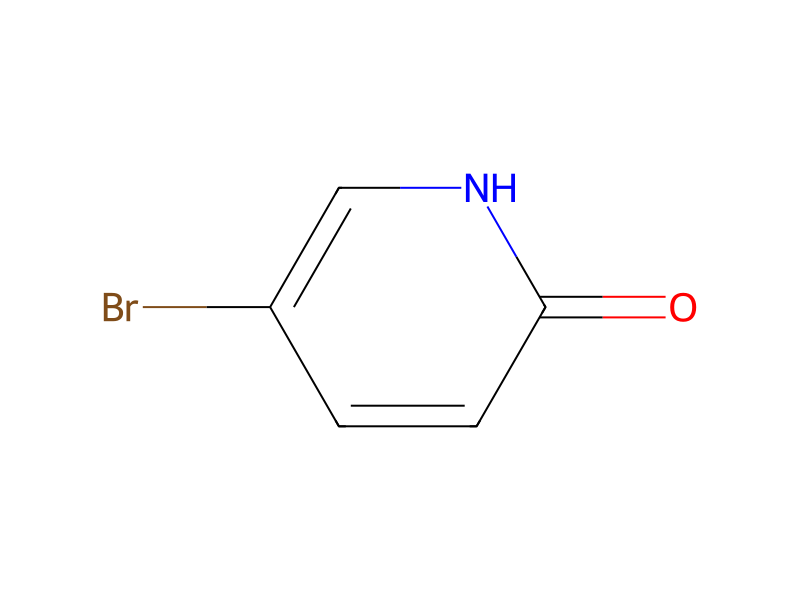
Br[C:2]1[CH:3]=[CH:4][C:5](=[O:8])[NH:6][CH:7]=1.[C:9]1(B(O)O)[CH:14]=[CH:13][CH:12]=[CH:11][CH:10]=1.C(=O)([O-])[O-].[Na+].[Na+]>C1C=CC([P]([Pd]([P](C2C=CC=CC=2)(C2C=CC=CC=2)C2C=CC=CC=2)([P](C2C=CC=CC=2)(C2C=CC=CC=2)C2C=CC=CC=2)[P](C2C=CC=CC=2)(C2C=CC=CC=2)C2C=CC=CC=2)(C2C=CC=CC=2)C2C=CC=CC=2)=CC=1.C1(C)C=CC=CC=1>[C:9]1([C:2]2[CH:3]=[CH:4][C:5](=[O:8])[NH:6][CH:7]=2)[CH:14]=[CH:13][CH:12]=[CH:11][CH:10]=1Participants
6





Conditions
- Temperature
- 100 °C
Procedure
A mixture of 5-bromopyridin-2(1H)-one (500 mg), phenylboronic acid (385 mg), tetrakis(triphenylphosphine)palladium(0) (498 mg), 2M aqueous sodium carbonate solution (2.87 mL) and toluene (7.0 mL) was stirred at 100° C. for 1 hr under microwave irradiation. The reaction mixture was cooled to room temperature, and filtered through celite. To the filtrate was added saturated aqueous sodium hydrogen carbonate solution, and the mixture was extracted with ethyl acetate. The extract was dried over anhydrous sodium sulfate and concentrated under reduced pressure. The residue was purified by silica gel column chromatography (ethyl acetate/hexane) to give the title compound (100 mg).
Workup
- temperatureThe reaction mixture was cooled to room temperature
- filtrationfiltered through celite
- additionTo the filtrate was added saturated aqueous sodium hydrogen carbonate solution
- extractionthe mixture was extracted with ethyl acetate
- dry with materialThe extract was dried over anhydrous sodium sulfate
- concentrationconcentrated under reduced pressure
- customThe residue was purified by silica gel column chromatography (ethyl acetate/hexane)
Sources & evidence
- ORD record
- ord-4fb81f2c2c0b42e19516b2eededd690f
- Source dataset
- uspto-grants-2015_10
- Patent number
- US09150588B2
Reaction notes
Loading…