Isopropylamine → N-Isopropyl-2-nitroaniline
Reaction equation

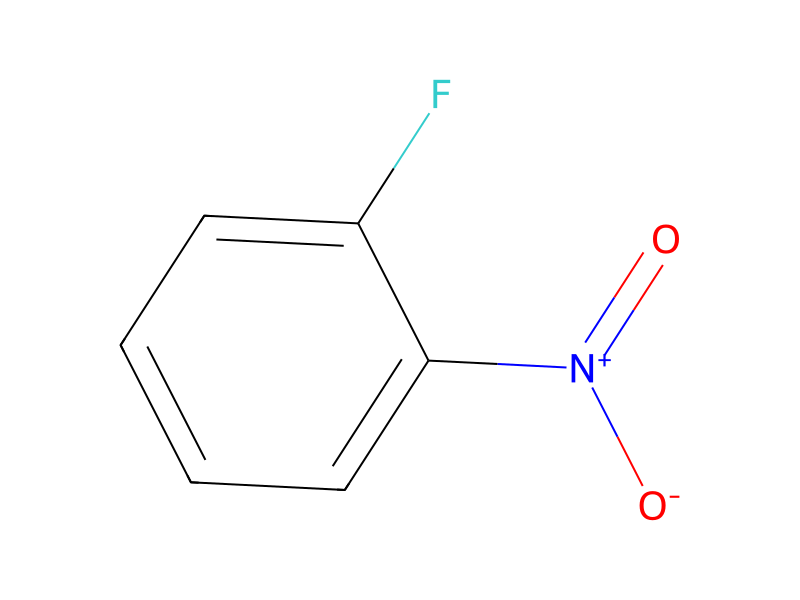
F[C:2]1[CH:7]=[CH:6][CH:5]=[CH:4][C:3]=1[N+:8]([O-:10])=[O:9].[CH:11]([NH2:14])([CH3:13])[CH3:12].CCN(C(C)C)C(C)C>CS(C)=O>[N+:8]([C:3]1[CH:4]=[CH:5][CH:6]=[CH:7][C:2]=1[NH:14][CH:11]([CH3:13])[CH3:12])([O-:10])=[O:9]Participants
5
Reactant 3


Product 1

Reagents, catalysts & solvents 1

Conditions
- Temperature
- 80 °C
Procedure
To a solution of 1-fluoro-2-nitrobenzene (0.5 mL, 4.7 mmol) in DMSO (10 mL) is added isopropylamine (0.6 mL, 7.1 mmol), followed by Hunig's base (1.2 mL, 7.1 mmol). The reaction flask is sealed and heated to 80° C. 16 h. The reaction is cooled to room temperature and is poured over ice water and extracted ethyl acetate. The organic layer is washed with water, brine, dried (Na2SO4) and concentrated to afford the title compound (828 mg, 97%) as an orange oil.
Workup
- customThe reaction flask is sealed
- custom16 h
- temperatureThe reaction is cooled to room temperature
- extractionextracted ethyl acetate
- washThe organic layer is washed with water, brine
- dry with materialdried (Na2SO4)
- concentrationconcentrated
Sources & evidence
- ORD record
- ord-1116bcea00684f7c9d0b901e22e1d0fe
- Source dataset
- uspto-grants-2015_10
- Patent number
- US09150577B2
Reaction notes
Loading…