Potassium Carbonate → 4-[2-(1H-indol-5-yloxy)ethyl]morpholine
Reaction equation

[OH:1][C:2]1[CH:3]=[C:4]2[C:8](=[CH:9][CH:10]=1)[NH:7][CH:6]=[CH:5]2.Cl.Cl[CH2:13][CH2:14][N:15]1[CH2:20][CH2:19][O:18][CH2:17][CH2:16]1.C(=O)([O-])[O-].[K+].[K+]>C(#N)C>[NH:7]1[C:8]2[C:4](=[CH:3][C:2]([O:1][CH2:13][CH2:14][N:15]3[CH2:20][CH2:19][O:18][CH2:17][CH2:16]3)=[CH:10][CH:9]=2)[CH:5]=[CH:6]1Participants
5
Reactant 3

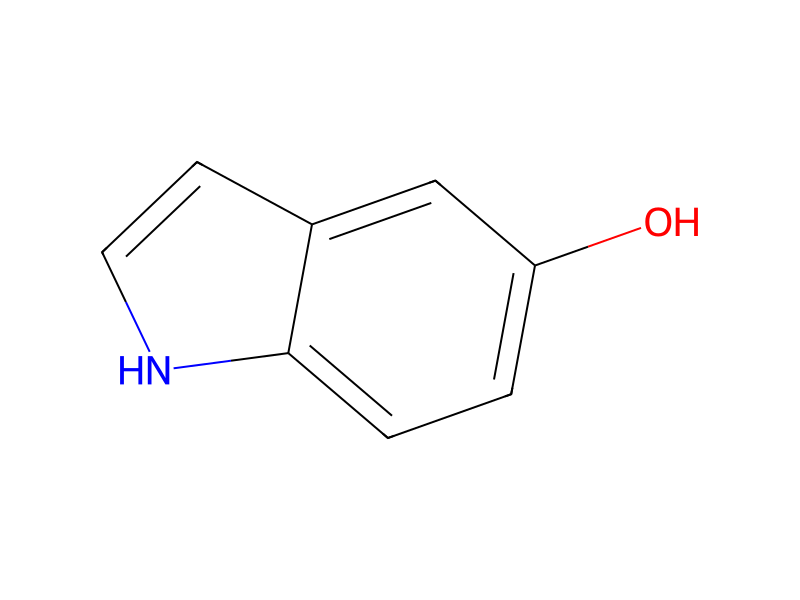

Product 1

Reagents, catalysts & solvents 1

Procedure
A solution of 5-hydroxy-1H-indole (0.13 g, 1.0 mmol) in acetonitrile (10 mL) was successively added with N-(2-chloroethyl)morpholine hydrochloride (0.19 g, 1.0 mmol), and potassium carbonate (0.28 g, 2.0 mmol), and the mixture was stirred at room temperature for 72 hours. The solvent was evaporated under reduced pressure, then the residue was added with ethyl acetate, and the organic layer was washed successively with water and saturated brine, and dried over anhydrous magnesium sulfate. The solvent was evaporated under reduced pressure, and then the residue was subjected to silica gel column chromatography (eluted with hexane/ethyl acetate (50:50→20:80)) to obtain 4-[2-(1H-indol-5-yloxy)ethyl]morpholine (0.12 g, 50%).
Workup
- customThe solvent was evaporated under reduced pressure
- additionthe residue was added with ethyl acetate
- washthe organic layer was washed successively with water and saturated brine
- dry with materialdried over anhydrous magnesium sulfate
- customThe solvent was evaporated under reduced pressure
- washthe residue was subjected to silica gel column chromatography (eluted with hexane/ethyl acetate (50:50→20:80))
Sources & evidence
- ORD record
- ord-8c0c91f8b8c744c0ac65bb96f73911fd
- Source dataset
- uspto-grants-2015_10
- Patent number
- US09156827B2
Reaction notes
Loading…