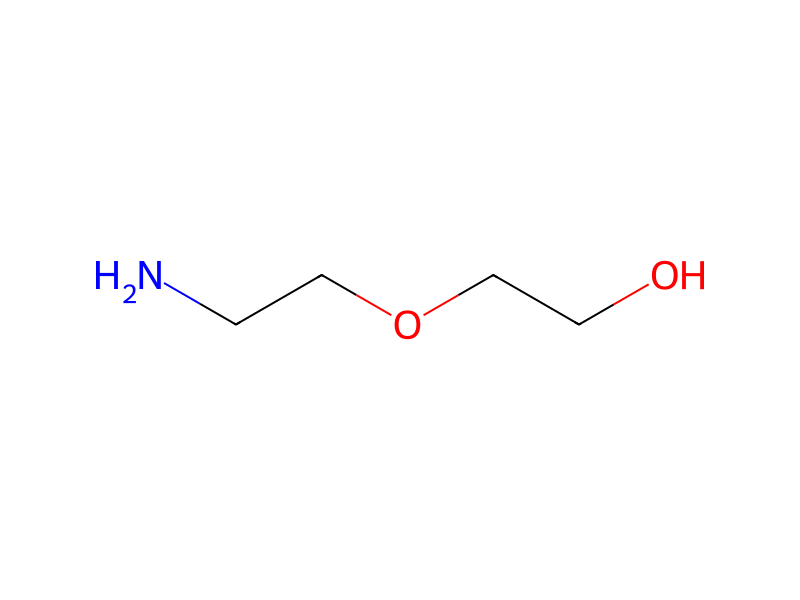
Diglycolamine → 6-hydroxy-N-(2-(2-hydroxyethoxy)ethyl)-2,5,7,8-tetramethylchroman-2-carboxamide
Reaction equation

[OH:1][C:2]1[C:3]([CH3:18])=[C:4]2[C:9](=[C:10]([CH3:13])[C:11]=1[CH3:12])[O:8][C:7]([CH3:17])([C:14]([OH:16])=O)[CH2:6][CH2:5]2.C1N=CN(C(N2C=NC=C2)=O)C=1.[NH2:31][CH2:32][CH2:33][O:34][CH2:35][CH2:36][OH:37]>>[OH:1][C:2]1[C:3]([CH3:18])=[C:4]2[C:9](=[C:10]([CH3:13])[C:11]=1[CH3:12])[O:8][C:7]([CH3:17])([C:14]([NH:31][CH2:32][CH2:33][O:34][CH2:35][CH2:36][OH:37])=[O:16])[CH2:6][CH2:5]2Participants
4


Procedure
Following the amide coupling procedure described in protocol A, 501 mg 6-hydroxy-2,5,7,8-tetramethylchroman-2-carboxylic acid (2.0 mmol), 360 mg CDI (2.23 mmol) and 231 mg 2-(2-aminoethoxy)ethanol (2.19 mmol) produced 557 mg of 6-hydroxy-N-(2-(2-hydroxyethoxy)ethyl)-2,5,7,8-tetramethylchroman-2-carboxamide as an amorphous white solid.
Sources & evidence
- ORD record
- ord-5b0eb9d452b0408c918192e01ce78516
- Source dataset
- uspto-grants-2015_10
- Patent number
- US09169196B2
Reaction notes
Loading…