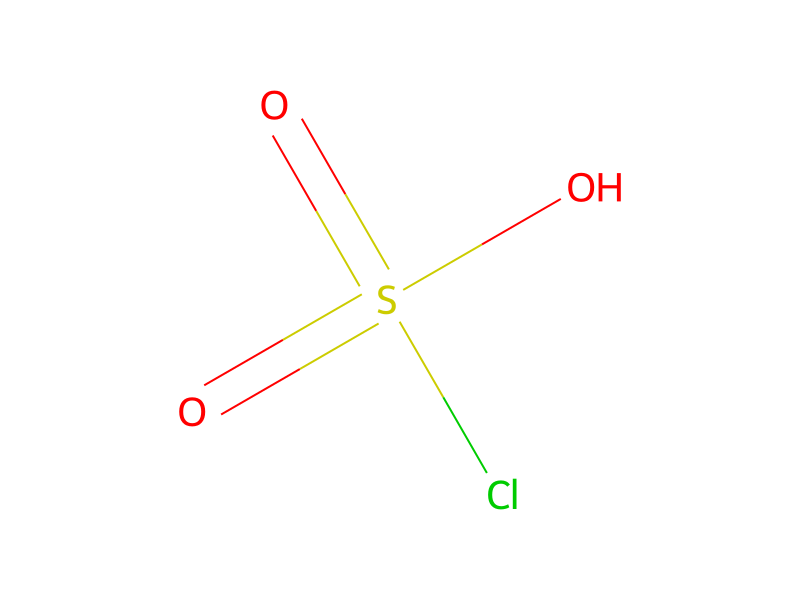
Chlorosulfonic acid → HCID 178433697, compound
Reaction equation

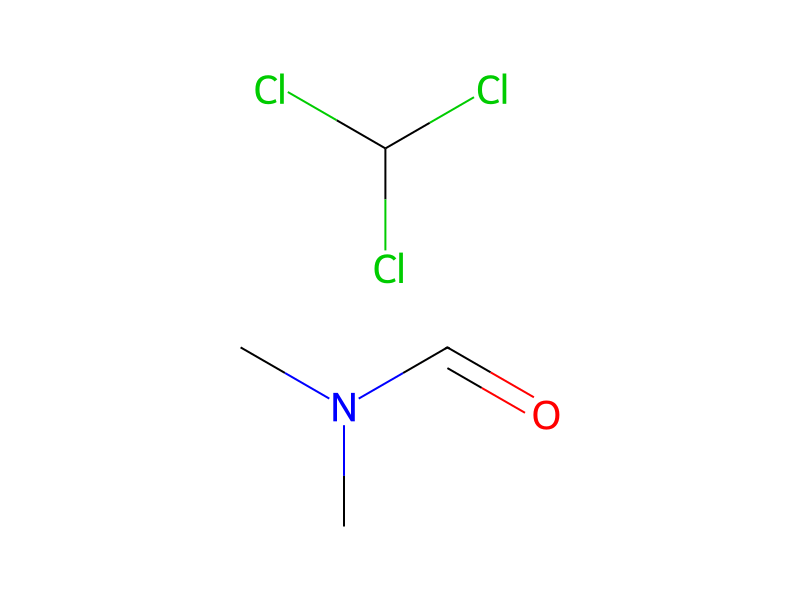
Cl[S:2]([OH:5])(=[O:4])=[O:3].C(N(CC)C(C)C)(C)C.[CH3:15][C:16]1[N+:21]([O-:22])=[C:20]([NH2:23])[CH:19]=[C:18]([N:24]([CH3:26])[CH3:25])[N:17]=1>C(Cl)(Cl)Cl.CN(C)C=O>[OH-:3].[CH3:15][CH:16]1[N:21]([O:22][S:2]([OH:5])(=[O:4])=[O:3])[C:20]([NH2:23])=[CH:19][C:18]([N:24]([CH3:25])[CH3:26])=[NH+:17]1Participants
Reactant 3


Product 1

Reagents, catalysts & solvents 1
Procedure
133 ml (0.002 mol) of chlorosulphonic acid is added, with stirring, to a solution of 0.72 ml (0.0042 mol) of N,N-diisopropylethylamine in 12 ml of a 1/1 chloroform/dimethylformamide mixture, cooled in ice. After a waiting time of 30 minutes, 0. 168 g (0.001 mol) of 2-methyl-4-amino-6-dimethylaminopyrimidine 3-oxide prepared according to Example 2 is added and the mixture is kept at between 5° and 10° C. for 7 hours under nitrogen. The solvent is evaporated. The residue, taken up in a little water, allows a white product to crystallise, which is filtered off. After recrystallisation from a DMF/water mixture, 0.11 g of pure inner salt, which decomposes at 226° C., is obtained. The yield is 44.3%. Elementary analysis for C7H12N4O4S; molecular weight=248.
Workup
- temperaturecooled in ice
- customAfter a waiting time of 30 minutes, 0
- additionis added
- customThe solvent is evaporated
- customto crystallise
- filtrationwhich is filtered off
- customAfter recrystallisation from a DMF/water mixture, 0.11 g of pure inner salt, which
- customdecomposes at 226° C.
- customis obtained
Sources & evidence
- ORD record
- ord-5dfd2572dc644cb09dc3135312cceab3
- Source dataset
- uspto-grants-1995_08
- Patent number
- US05438058
Reaction notes
Loading…